





What's Happening?
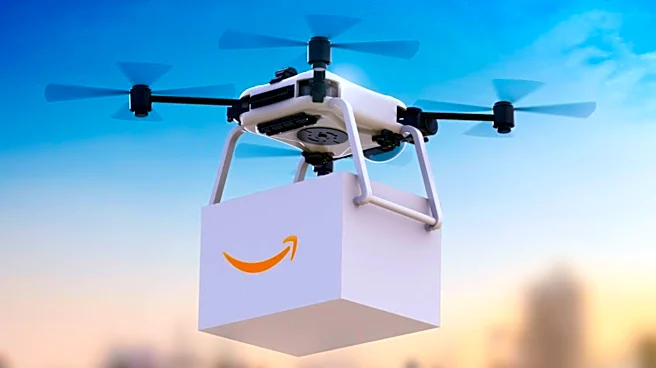
Retail giant Amazon has revealed plans to significantly expand its drone delivery service, Prime Air, to nearly 500 cities and towns across the United States by the end of 2026. This expansion represents a sixfold increase from its current operational
footprint. The initiative aims to provide drone delivery of lightweight packages, specifically those weighing 5 pounds or less, to tens of millions of customers in various metropolitan areas, including Detroit, Dallas, Houston, Omaha, and Tampa. Amazon's Prime Air service currently operates in seven states, including Florida and Texas, making thousands of deliveries daily. The company plans to launch drone delivery soon in Chicago, Syracuse, Cleveland, Atlanta, and Boise, with additional locations to follow. These electric-powered drones are designed to operate in light rain and a range of temperatures, utilizing onboard cameras and sensors for navigation without live video monitoring by employees.
Why It's Important?
This ambitious expansion by Amazon signifies a major step forward in the widespread adoption of drone delivery technology in the U.S. It underscores a growing trend in the retail sector to offer faster and more efficient delivery options, directly impacting consumer expectations and logistics infrastructure. The move will intensify competition within the e-commerce and delivery industries, particularly with companies like Walmart, which also announced its own drone delivery expansion plans. For consumers, it means increased access to rapid delivery services, potentially within 30 minutes, for a wider range of products. The service offers free delivery for Amazon Prime members on orders over $50, with a $2.99 charge for smaller orders, and a $4.99 charge for non-Prime members. This expansion could also drive innovation in drone technology, regulatory frameworks for unmanned aerial vehicles, and urban planning to accommodate drone operations, potentially creating new job opportunities in technology and logistics.
What's Next?
Amazon is set to roll out its drone delivery service in several new metro areas, including Chicago, Syracuse, Cleveland, Atlanta, and Boise, in the near future, with more locations to be added throughout 2026. The company will likely focus on scaling its operations, refining its drone technology, and navigating regulatory challenges associated with widespread drone deployment. As the service expands, Amazon will need to address logistical complexities, public acceptance, and safety concerns. The competitive landscape will also evolve, with other major retailers potentially accelerating their own drone delivery initiatives to keep pace. This expansion will likely lead to further discussions and developments in air traffic management for drones and the integration of autonomous delivery systems into urban and suburban environments.
Beyond the Headlines
The widespread implementation of drone delivery by Amazon could have profound societal and environmental implications. Environmentally, the use of electric drones for last-mile delivery could reduce carbon emissions associated with traditional delivery vehicles, contributing to sustainability goals. However, it also raises questions about noise pollution in residential areas and the visual impact of increased drone traffic. Ethically, the use of autonomous delivery systems brings considerations regarding data privacy, particularly concerning the data collected by drone sensors, even if not live-monitored. The shift towards drone delivery could also reshape the labor market, potentially reducing demand for human delivery drivers while creating new roles in drone maintenance, operation, and software development. Furthermore, the success and scale of Amazon's initiative could influence future urban infrastructure planning, potentially leading to the development of dedicated drone landing zones or delivery hubs.