





What's Happening?
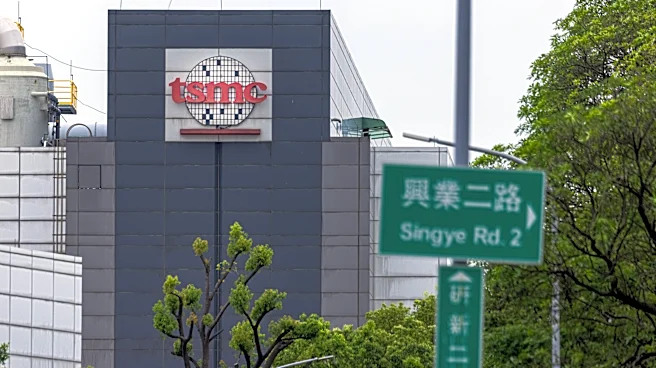
Taiwan Semiconductor Manufacturing Co. (TSMC) has established a significant presence in Phoenix, Arizona, with its first fab beginning production in late 2024. The company's total planned investment in the Phoenix area has reached $265 billion, encompassing
12 facilities, including packaging and advanced research and development. The Arizona campus, which broke ground in 2021, is expected to employ 6,000 people across its first three fabs. TSMC Arizona currently uses 4.75 million gallons of water daily, primarily reclaimed wastewater, and aims to increase water reuse from 65% to over 95% by 2028 with a new industrial water reclamation plant. The facility also generates nearly 15 megawatts of solar power on-site. Environmental assessments by the U.S. Department of Commerce concluded that the plant would not significantly affect air quality, with TSMC committing to emission control technologies and greenhouse gas reduction. The company has qualified for over $10 billion in federal assistance under the CHIPS Act, alongside state and local incentives.
Why It's Important?
The TSMC Arizona project serves as a critical case study for future large-scale semiconductor manufacturing investments in the U.S., particularly for proposed sites like Brazos County, Texas. The scale of TSMC's investment and operational requirements in Arizona highlights the substantial infrastructure demands, including water, electricity, and waste management, that local communities must prepare for. The project's environmental commitments, such as significant reductions in pollutants and greenhouse gas emissions, set a precedent for sustainable manufacturing practices in the semiconductor industry. Furthermore, the federal support through the CHIPS Act underscores the U.S. government's strategic imperative to bolster domestic chip production, aiming to enhance national security and economic competitiveness by reducing reliance on foreign supply chains. The economic impact extends beyond direct employment, fostering ancillary developments like the Halo Vista project in Arizona, indicating broader regional growth potential.
What's Next?
In Phoenix, TSMC's industrial water reclamation plant is slated for completion in 2028, which is expected to significantly boost water reuse efficiency. The direct pricing contract with Arizona Public Service (APS) for power supply, which will ramp up to 1.88 gigawatts over an initial 25-year term, awaits a decision from state regulators. This contract includes provisions for TSMC to provide upfront credit support and collateral starting in January 2027 to back new resources developed by APS. For Brazos County, Texas, the Arizona model provides a detailed preview of the potential scale and operational needs of a similar advanced chip facility. Local officials and residents in Brazos County can anticipate similar discussions regarding water usage, power grid demands, environmental impact mitigation, and the potential for significant economic development and job creation, mirroring the growth observed around the Phoenix campus.
Beyond the Headlines
The TSMC Arizona development illustrates the complex interplay between advanced manufacturing, environmental stewardship, and regional economic development. The commitment to recycling 96% of waste and treating wastewater on-site before discharge highlights a growing trend in industrial responsibility, particularly for resource-intensive sectors. The project's reliance on substantial federal incentives through the CHIPS Act also signals a broader shift in U.S. industrial policy, where government intervention is actively shaping critical supply chains. This model could influence future public-private partnerships in other strategic industries, emphasizing domestic production and technological independence. The long-term implications include not only job creation and economic growth but also the establishment of new standards for sustainable industrial operations and the potential for the U.S. to regain a leading edge in semiconductor manufacturing, thereby impacting global technological leadership and geopolitical dynamics.