







What's Happening?
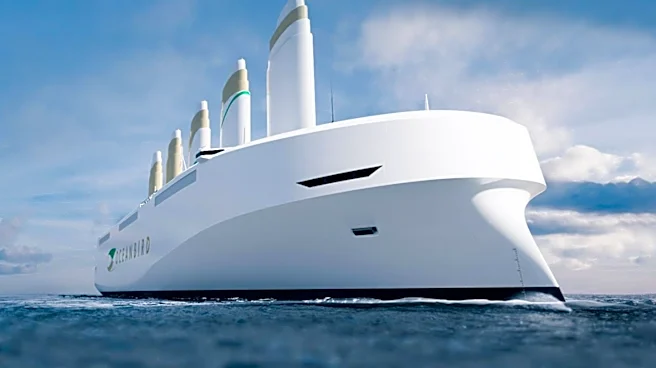
Wallenius Marine, a prominent car carrier company, is set to implement its first commercial application of wind-assisted propulsion technology. The company plans to retrofit two wing sails onto one of its newest car carriers, the Way Forward (18,565 dwt),
in 2027. This initiative is a collaboration with Oceanbird, a Swedish joint venture established by Wallenius Lines and Alfa Laval. Johan Mattsson, CEO of Wallenius Marine, stated that wind propulsion will play a crucial role in the future of shipping and that this installation will provide practical experience in reducing fleet emissions. The Way Forward, built in 2024, is already designed for efficiency with a hydrodynamically optimized hull, streamlined superstructure, lightweight steel structure, and dual-fuel machinery capable of using LNG/LBG and diesel/biodiesel. The wing sails will feature tilting technology to reduce air draft in port, enhancing maneuverability. This follows the successful installation of a single Oceanbird wing sail on the Wallenius Wilhelmsen vessel Tirranna in June 2026, with performance data currently being verified.
Why It's Important?
This development signifies a significant step towards decarbonizing the maritime shipping industry, which is a major contributor to global emissions. The adoption of wind-assisted propulsion by a commercial car carrier like the Way Forward demonstrates a tangible commitment to sustainable practices within a sector heavily reliant on fossil fuels. If successful, this technology could set a precedent for other shipping companies, accelerating the transition to more environmentally friendly shipping methods. The U.S. maritime industry, while not directly involved in this specific project, could benefit from the operational data and technological advancements, potentially influencing future regulations and investment in similar green shipping solutions for U.S. flagged vessels or those operating in U.S. waters. Reduced emissions from international shipping could also contribute to broader U.S. climate goals and air quality improvements in port cities. Furthermore, the economic viability of such systems, if proven, could lead to long-term fuel cost savings for shipping companies, impacting global supply chains and trade costs.
What's Next?
The retrofit of the Way Forward with two wing sails is scheduled for 2027. Following the installation, Wallenius Marine and Oceanbird will gather operational data to assess the performance and efficiency of the wind-assisted propulsion system in commercial service. This data will be crucial for validating the technology's effectiveness and informing future designs and broader adoption within the shipping industry. Oceanbird CEO Amrit Kaur Bhullar highlighted that this is their first multi-wing installation and a key step towards their vision of primarily wind-powered vessels. The insights gained from this project are expected to support the development of even more energy-efficient ships. The success of this commercial application could encourage other major shipping lines to invest in similar technologies, potentially leading to a wider industry shift towards wind propulsion and further innovation in sustainable maritime transport solutions.
Beyond the Headlines
The integration of wing sails on commercial vessels like the Way Forward represents more than just a technological upgrade; it symbolizes a broader paradigm shift in how the shipping industry approaches environmental responsibility and operational efficiency. This move could trigger a re-evaluation of traditional ship design and propulsion methods, fostering a new era of innovation focused on renewable energy sources. Ethically, it underscores the growing pressure on industries to mitigate their environmental impact, aligning with global efforts to combat climate change. Culturally, it could shift public perception of shipping from a high-polluting industry to one actively pursuing sustainable solutions. The long-term implications include potential changes in international maritime regulations, increased demand for green shipbuilding technologies, and a possible redefinition of what constitutes a 'modern' and 'efficient' vessel. This pioneering effort could also inspire cross-sector collaborations, driving advancements in materials science and aerodynamics for larger-scale applications.