



What's Happening?
Denzel Washington has reflected on a pivotal moment in his career during the filming of 'Training Day' in 2001, where he realized he had been miscast in his 1995 film 'Devil in a Blue Dress'. Washington expressed frustration that he had not been given
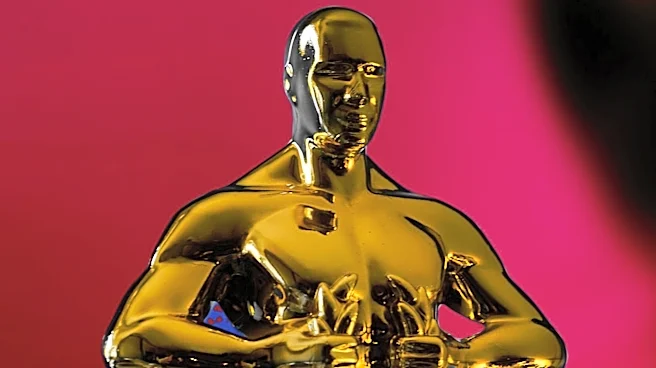
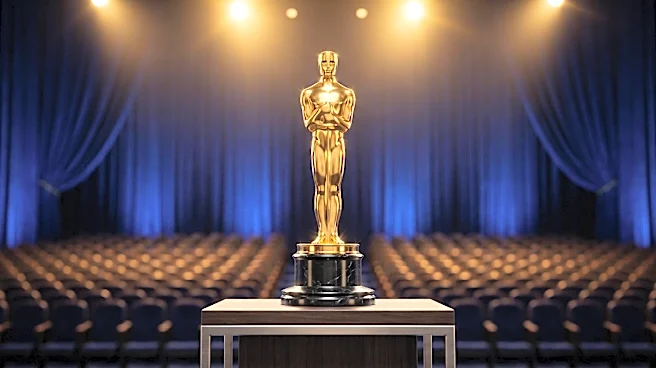
the opportunity to play a more malevolent character, specifically noting Don Cheadle's role as Mouse in 'Devil in a Blue Dress' as the part he wished he had played. This realization spurred a desire in Washington to explore darker, more villainous roles, a departure from the heroic figures he had predominantly portrayed earlier in his career. His performance as the corrupt LAPD detective Alonzo Harris in 'Training Day' ultimately earned him the Best Actor Oscar in 2002, marking a significant shift in his on-screen persona. This shift continued with his portrayal of Frank Lucas in Ridley Scott's 2007 crime biopic 'American Gangster', where he played a ruthless New York City drug kingpin.
Why It's Important?
This reflection by Denzel Washington highlights a significant turning point in his career, demonstrating an actor's conscious effort to evolve and challenge their established on-screen image. His decision to pursue more complex and morally ambiguous characters not only broadened his acting range but also redefined audience perceptions of his capabilities. This shift allowed him to secure an Academy Award for 'Training Day' and critical acclaim for roles like Frank Lucas, solidifying his status as one of Hollywood's most versatile and respected actors. For the film industry, it underscores the impact of an actor's personal artistic ambition on the types of roles they seek and the subsequent influence on cinematic storytelling, particularly in the portrayal of anti-heroes and complex villains. This evolution also provided audiences with more nuanced and challenging performances, contributing to the richness of American cinema.
Beyond the Headlines
Washington's realization about his casting in 'Devil in a Blue Dress' and subsequent pursuit of darker roles delves into the broader theme of typecasting in Hollywood and an actor's struggle to break free from it. For years, Washington was often cast as the virtuous hero, a role he excelled in but which, as he revealed, limited his artistic expression. His conscious decision to seek out roles like Alonzo Harris and Frank Lucas not only showcased his immense talent but also challenged industry norms about the kinds of characters actors of his stature were expected to play. This move paved the way for other actors to explore more complex and morally ambiguous characters, contributing to a more diverse and realistic portrayal of human nature in film. It also highlights the internal artistic drive that can lead to career-defining performances and reshape an actor's legacy.