





What's Happening?
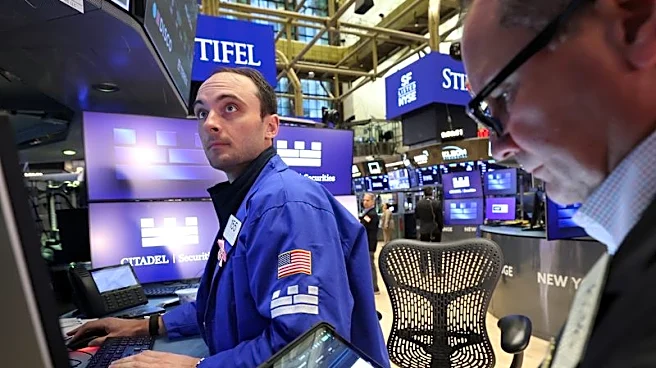
Jack Hough, host of Barron’s Streetwise, has drawn parallels between the current artificial intelligence (AI) boom and the dot-com bubble of the 1990s, suggesting a potential market correction. Hough noted that while the dot-com era ultimately yielded
useful technologies, the timing of investor returns was misjudged, leading to a painful market pop in 2000. He anticipates that data center builders and their suppliers could face significant struggles in the near term if expected returns from AI investments do not materialize, potentially taking years to recover. This perspective comes as the Invesco QQQ Trust (NASDAQ:QQQ) experienced a 10.99% decline through November 25, with the Nasdaq 100 entering a "-20% bear market" according to Bespoke Investment Group. Hough highlighted that the financing patterns in the AI sector, involving bonds, share sales, and inter-company financing, mirror those seen during the dot-com era, making companies more sensitive to interest rates as returns slow.
Why It's Important?
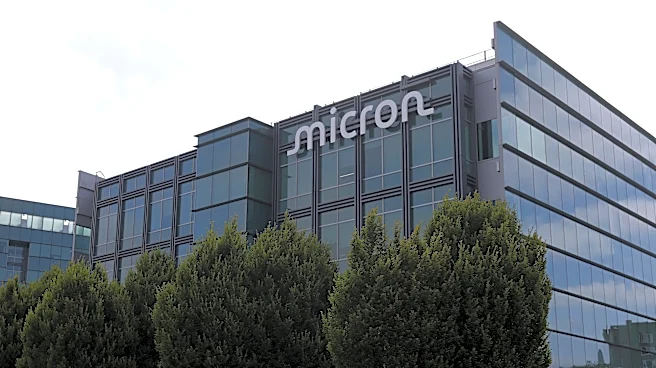
The comparison of the AI boom to the dot-com bubble carries significant implications for U.S. investors and the broader economy. A potential market correction in the AI sector could lead to substantial losses, particularly for older investors who, according to Federal Reserve data, hold a larger share of household stocks and mutual funds now (78.4% in 2026 Q2) compared to 2000 Q1 (61.2%). Such a downturn could force retirees to sell shares at low prices to cover living costs, turning paper losses into permanent ones. The high concentration of tech stocks, especially AI-linked companies like NVIDIA and Micron Technology, within major indices like the S&P 500 and QQQ, means a correction could have a widespread impact on diversified portfolios. Hough's analysis suggests that while the underlying technology of AI is valuable, the timing and valuation of current investments might be unsustainable, posing a risk to financial stability and investor confidence.
What's Next?
Investors are advised to closely monitor two key indicators: whether AI spenders begin to question their returns and financing costs, and the Federal Reserve’s December 9 decision regarding interest rates. These factors could signal whether the AI market will experience a 'graceful deceleration' or a more disruptive 'messy' correction. For investors concerned about AI's dominance in their holdings, Hough suggested considering an equal-weight S&P 500 fund as a 'satellite position' to diversify away from heavily weighted tech stocks. While diversifying away from big tech hasn't always paid off in the past, this strategy aims to mitigate risk in the event of an AI-driven market downturn. The market's recovery after the 2000 dot-com bust offers a historical precedent, but for retirees, having sufficient cash and bonds to cover several years of withdrawals is crucial to avoid being forced to sell during a slump.
Beyond the Headlines
The current situation highlights a recurring theme in technological revolutions: the challenge of accurately valuing nascent industries and managing investor expectations. The dot-com bubble demonstrated that even groundbreaking technologies can lead to speculative excesses and subsequent market corrections if growth projections outpace actual returns. The increased concentration of wealth in the hands of older investors today, compared to 2000, introduces a new dimension of risk, as their ability to withstand prolonged market downturns is critical for their retirement security. This scenario also underscores the ongoing debate about passive investing and the risks associated with market-cap-weighted indices that can become heavily concentrated in a few high-flying sectors. The potential for a significant AI market correction could prompt a re-evaluation of investment strategies, emphasizing diversification and risk management, particularly for those nearing or in retirement.