




What's Happening?
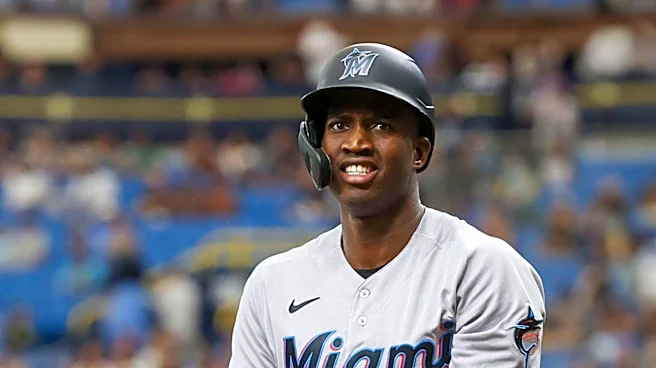
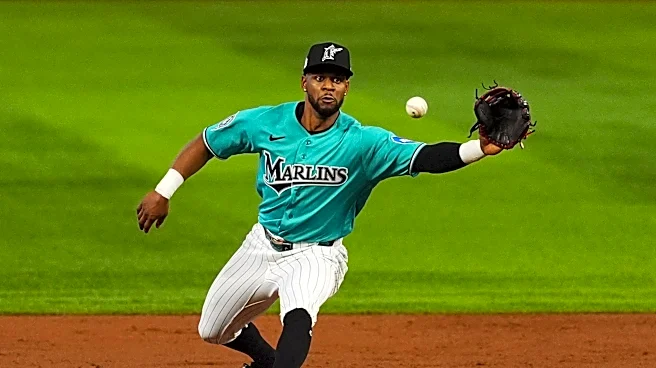
The Miami Marlins have added four prospects—pitchers Eliazar Dishmey, Jace Beck, and Brandon White, along with infielder Juan Matheus—to their 40-man roster. This strategic move, announced on Tuesday, protects these players from being selected by other
organizations in the upcoming Rule 5 Draft. Eliazar Dishmey, recognized as the Marlins' Minor League Pitcher of the Year, split the 2026 season between High-A and Double-A, achieving a 2.92 ERA over 104.2 innings. Jace Beck, acquired from the Chicago Cubs, made six starts at Triple-A, while Brandon White, despite a 5.11 ERA across Double-A and Triple-A, showed significant strikeout potential. Juan Matheus, a switch-hitting infielder, progressed through High-A, Double-A, and Triple-A in 2026, slashing .266/.342/.421 across the three levels. The Marlins' 40-man roster now stands at 39 players, providing flexibility for future offseason decisions. However, this decision also means that five other ranked prospects, including Karson Milbrandt and Kemp Alderman, were left unprotected and are now exposed to the Rule 5 Draft.
Why It's Important?
This move is crucial for the Miami Marlins as it reflects their long-term strategy of developing and retaining young talent, which is a cornerstone of their organizational philosophy. By protecting these four prospects, the Marlins are safeguarding potential future contributors and ensuring depth within their system. The decision to leave other ranked prospects unprotected, however, carries inherent risks, as these players could be claimed by other teams, potentially depriving the Marlins of valuable assets that could address future roster needs. This balancing act highlights the challenges faced by teams in managing their prospect pipeline while adhering to roster limitations and the rules of the Rule 5 Draft. The success of these protected prospects, particularly Dishmey, Beck, White, and Matheus, will be vital in determining the Marlins' competitive outlook in the coming seasons, especially given their relatively lower payroll compared to other top teams in the league.
What's Next?
The immediate next step for the Miami Marlins is the Rule 5 Draft, scheduled for December 9 at the Winter Meetings in San Diego. During this draft, other MLB teams will have the opportunity to select any unprotected eligible players from the Marlins' farm system. The Marlins will closely monitor the draft to see if any of their unprotected prospects, such as Karson Milbrandt or Kemp Alderman, are claimed. Following the draft, the Marlins will continue their offseason preparations for the 2027 season. This will likely involve evaluating their current roster, identifying areas for improvement, and potentially making further acquisitions to bolster their team. The development of the protected prospects will be a key focus, with the organization aiming to integrate them into the major league team as they continue to refine their skills. The team's ability to make the postseason will depend on the performance of both their returning core and the successful integration of these emerging talents.
Beyond the Headlines
The Marlins' approach to the Rule 5 Draft underscores a broader philosophical tension in baseball between immediate competitiveness and long-term sustainability. By investing in and protecting certain prospects while exposing others, the team is making calculated bets on which young players are most likely to contribute to future success. This strategy is particularly significant for a team like the Marlins, which operates with a lower payroll compared to many of its rivals. Their reliance on a robust farm system and the strategic development of young talent is a necessity for remaining competitive. The ethical implications of leaving prospects unprotected, effectively offering them to other teams, highlight the business-driven nature of professional sports, where individual player development is often weighed against organizational needs and strategic flexibility. This ongoing cycle of development, protection, and potential loss of talent shapes the competitive landscape of MLB and influences how teams build their rosters for both the present and the future.