





What's Happening?
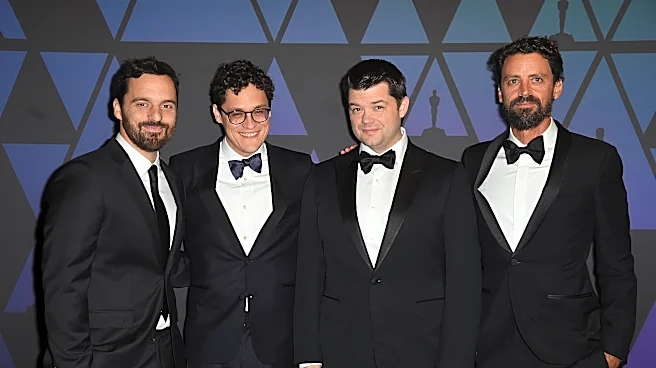
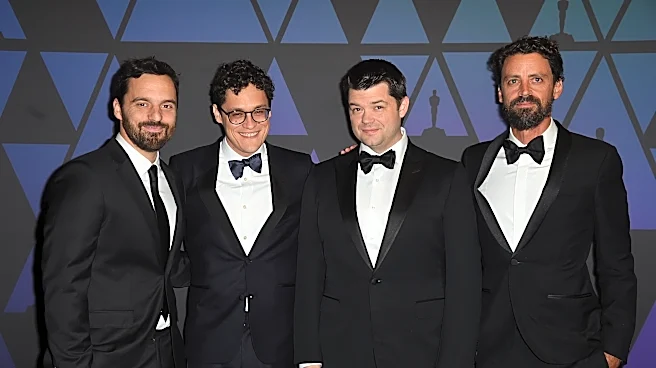
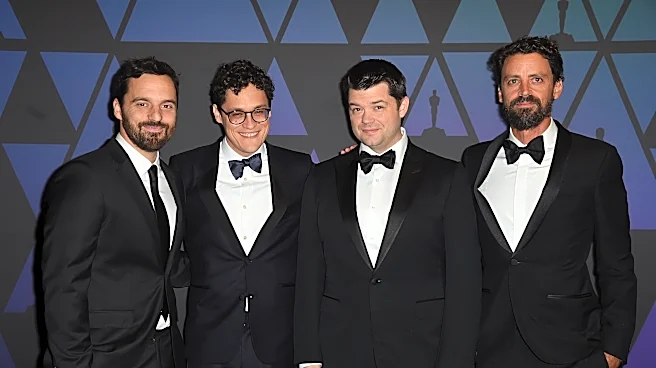
Cinematographer Greig Fraser discussed his collaboration with directors Phil Lord and Christopher Miller on the visual style of the film 'Project Hail Mary.' Fraser revealed that the team drew heavily from 1980s pop culture references to craft the movie's
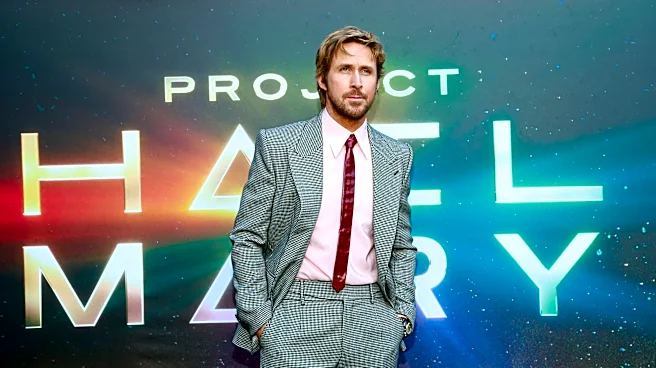
aesthetic. He noted that discussions with Lord and Miller often referenced films like 'E.T.' and various cartoons from the era. Specifically, Lord mentioned 'Scooby-Doo' when discussing transitions between space and Earth scenes, which inspired Fraser to use a mis-timed shutter to create image streaking for these transitions. The film, an Amazon MGM production starring Ryan Gosling, tells the story of a science teacher who wakes up in space as humanity's last hope against a sun-dimming parasite. The narrative alternates between present-day space and Earth flashbacks, with Fraser aiming for a 'cooler' feel for space scenes and a 'warmer' tone for Earth memories, while avoiding typical sci-fi tropes.
Why It's Important?
This collaboration highlights a trend in contemporary filmmaking where established directors and cinematographers leverage nostalgic pop culture elements to create unique visual experiences. For 'Project Hail Mary,' the deliberate incorporation of 1980s aesthetics by Christopher Miller, Phil Lord, and Greig Fraser could resonate with audiences who grew up with those influences, potentially enhancing the film's appeal and emotional depth. The approach demonstrates how filmmakers are finding innovative ways to translate classic visual storytelling techniques into modern cinema, moving beyond direct replication to capture the 'feeling' of past eras. This method can influence future productions, encouraging more creative interpretations of historical cinematic styles rather than straightforward homages, thereby enriching the visual language of Hollywood films and offering fresh perspectives on familiar themes.
What's Next?
The release and reception of 'Project Hail Mary' will provide insights into how audiences respond to this specific blend of 1980s pop culture influence and modern cinematic techniques. If successful, this approach could encourage Christopher Miller, Phil Lord, and other filmmakers to continue exploring similar nostalgic inspirations in future projects, potentially leading to a broader trend in Hollywood. The film's visual style, particularly its use of subtle cues and technical methods like mis-timed shutters to evoke a specific era, might also influence cinematography trends. Future discussions among film critics and industry professionals will likely analyze the effectiveness of these visual choices, potentially shaping how directors and cinematographers approach genre films and adaptations in the coming years, especially those with science fiction or nostalgic themes.
Beyond the Headlines
The creative process behind 'Project Hail Mary,' as described by Greig Fraser, reveals a deeper artistic philosophy shared by Christopher Miller and Phil Lord: a commitment to translating the essence of pop culture influences rather than merely imitating them. Their discussions about 'Scooby-Doo' transitions, for instance, led to a sophisticated technical solution (mis-timed shutter) rather than a literal visual quote. This approach underscores a nuanced understanding of how cultural memory functions in art—it's not about direct reproduction but about evoking a shared emotional and aesthetic experience. This method could signify a shift in how filmmakers engage with source material and cultural touchstones, moving towards more interpretive and transformative adaptations. It also highlights the collaborative synergy between directors and cinematographers in shaping a film's entire sensory experience, where every visual choice is deeply rooted in a collective artistic vision and cultural understanding.