


What's Happening?
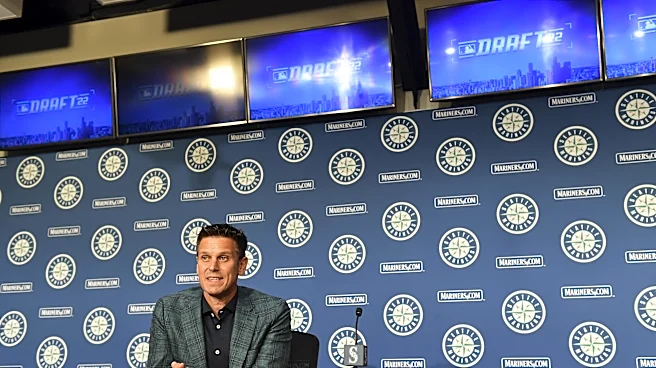
The Seattle Mariners are actively seeking to bolster their infield, particularly on the left side, with flexibility for either a shortstop or third baseman. President of baseball operations Jerry Dipoto indicated that a trade is the most probable route
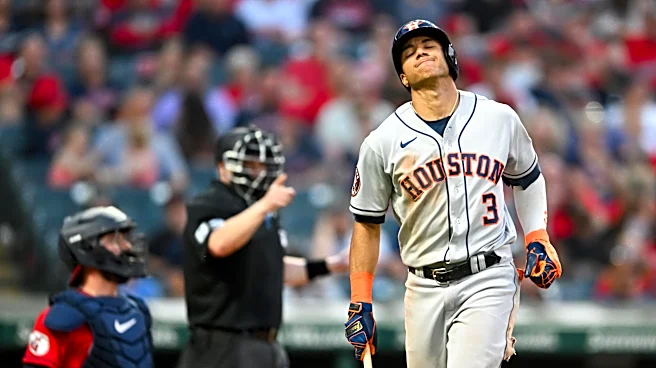
for an upgrade, prioritizing improved infield defense. The Mariners have internally discussed or inquired about several players, including Otto Lopez, Gunnar Henderson, Jordan Westburg, Elly De La Cruz, Zach Neto, Jeremy Pena, Casey Schmitt, and Zack Gelof. However, acquiring players from within the AL West, such as Neto and Pena, presents significant challenges. According to Adam Jude of the Seattle Times, Astros owner Jim Crane typically views intradivision deals as a nonstarter, complicating potential negotiations for players like Jeremy Pena. This stance from a key AL West owner limits the Mariners' options for acquiring talent from division rivals, despite their clear need for infield improvements.
Why It's Important?
Jim Crane's reluctance to engage in intradivision trades significantly impacts the competitive landscape of Major League Baseball, particularly within the American League West. This policy creates a barrier for teams like the Mariners, who are looking to strengthen their roster but find their options limited when targeting players from division rivals. Such a stance can lead to increased trade costs or force teams to look outside their division, potentially for less ideal fits or higher prices. For the Astros, this approach helps prevent strengthening direct competitors, maintaining their competitive edge. However, it also reduces the overall fluidity of player movement within the league, potentially affecting player valuations and the strategic decisions of general managers. The broader implication is a less dynamic trade market within divisions, which could influence how teams build their rosters and manage their farm systems, as they might be less inclined to develop players who could eventually be traded to a rival.
What's Next?
The Mariners will likely continue their search for infield upgrades by focusing on teams outside the AL West, given Jim Crane's reported stance on intradivision trades. This may involve exploring options with teams in the National League or the AL East, potentially leading to more complex trade packages or higher acquisition costs. For the Astros, maintaining this policy means they will likely avoid trading key players to division rivals, preserving their competitive advantage within the AL West. Other AL West teams will also need to factor Crane's position into their trade strategies, understanding that direct player exchanges within the division might be difficult to execute. The situation underscores the strategic considerations that go beyond player talent, involving inter-organizational relationships and competitive philosophies.
Beyond the Headlines
The reported policy of Astros owner Jim Crane regarding intradivision trades highlights a deeper aspect of competitive strategy in professional sports. While not explicitly a league rule, such unwritten policies can significantly shape the trade market and team building. It reflects a desire to protect competitive secrets and prevent rivals from gaining direct advantages, even if it means foregoing potentially beneficial transactions. This approach can foster a more insular competitive environment within divisions, where teams are less willing to help each other, even indirectly. It also raises questions about the balance between competitive integrity and the overall health of the league's player movement system. Such stances can lead to a more fragmented trade market, where teams prioritize long-term competitive insulation over short-term transactional gains, influencing how talent is distributed across the league.