





What's Happening?
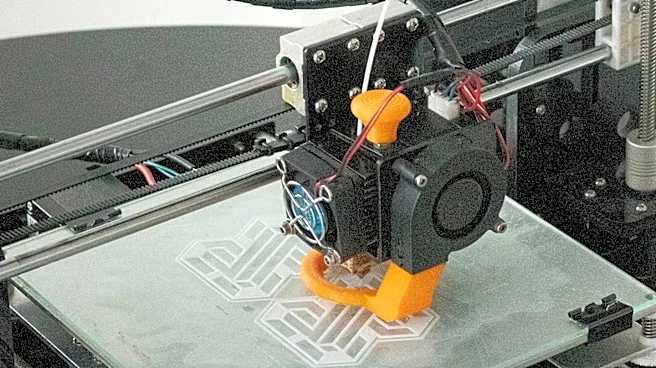
FKM Additive Manufacturing has achieved a 67% increase in productivity for a specific production part by utilizing the next generation of EOS's polymer platform. This advancement was observed during pre-market launch testing of the new EOS system, which
is slated for an official unveiling at Formnext. The company noted a significant reduction in build time per component, decreasing from 3 hours and 10 minutes to 1 hour and 54 minutes when compared to the previous machine model. The test part was an internally designed powder dispenser with a diverter flap, created to meet the demands of FKM's own powder handling system due to increasing material volumes. In addition to faster production, FKM also reported improved dimensional accuracy and more consistent results across the entire build area, highlighting the system's enhanced capabilities. Matthias Henkel, Managing Director at FKM Additive Manufacturing, emphasized that the economic value delivered by new technology is a crucial factor for the company, and the higher productivity of the new EOS system aligns well with their single-shift operation.
Why It's Important?
This productivity gain is significant for the additive manufacturing sector, particularly for companies like FKM that produce medium-sized components in higher quantities and large series-format parts. The ability to complete a full build job daily and achieve better machine utilization directly impacts profitability and simplifies production planning. For the broader U.S. manufacturing industry, such advancements in additive manufacturing technology can lead to increased efficiency, reduced production costs, and faster time-to-market for various products. This allows manufacturers to meet growing contract demands without necessarily expanding their physical footprint or acquiring more machines at the same rate. The improved reproducibility and consistent part properties across the build chamber could also reduce design iterations and qualification efforts for new applications, accelerating innovation and adoption of additive manufacturing in diverse industries. This development underscores the potential for advanced manufacturing technologies to drive substantial operational improvements and competitive advantages.
What's Next?
The official market launch of the new EOS polymer platform at Formnext will likely generate significant interest within the additive manufacturing community. Following its release, other manufacturers may adopt this technology, potentially leading to a broader industry-wide increase in productivity and efficiency. FKM's success story could serve as a case study, encouraging more companies to invest in next-generation additive manufacturing solutions to enhance their production capabilities. The ability to produce more parts in the same timeframe without additional capital expenditure on floor space or machinery could become a key differentiator for businesses looking to scale their operations. Furthermore, the reported improvements in dimensional accuracy and consistency suggest that the technology could open doors for more demanding applications where precision is paramount, potentially expanding the market for additively manufactured components across various sectors.
Beyond the Headlines
The implications of such productivity leaps extend beyond immediate cost savings and increased output. This advancement could foster a shift towards more localized and agile manufacturing processes, reducing reliance on complex global supply chains. Companies might find it more feasible to produce specialized parts on-demand, leading to greater customization and responsiveness to market needs. Ethically, increased automation and productivity in manufacturing raise questions about workforce adaptation and the need for upskilling employees to manage advanced machinery. Legally, intellectual property considerations around proprietary designs and manufacturing processes will become even more critical as these technologies become more widespread. Culturally, this could further cement the role of additive manufacturing as a mainstream production method, moving it beyond prototyping and niche applications into high-volume, high-precision manufacturing, thereby transforming traditional industrial paradigms.