





What's Happening?
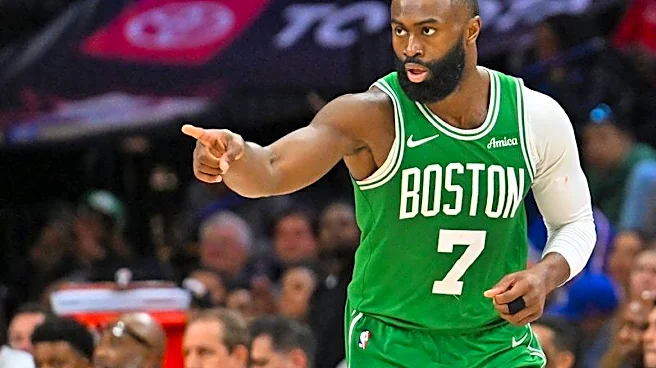
The Boston Celtics have traded Jaylen Brown, a key player in their lineup, during the NBA's summer moratorium. This period, which temporarily halts the finalization of trades and signings, allowed fans and the organization to process the trade's implications.
Celtics president of basketball operations Brad Stevens and lead owner Bill Chisholm are set to address the trade publicly, acknowledging Brown's significant contributions, including his role in securing the team's 18th championship banner. The trade, which involved acquiring Paul George, has sparked mixed reactions among fans, who have experienced a range of emotions from denial to acceptance. The decision was influenced by financial considerations, including Brown's substantial contract and the team's long-term salary cap strategy.
Why It's Important?
The trade of Jaylen Brown marks a significant shift in the Celtics' strategy, impacting both the team's dynamics and its financial planning. Brown's departure ends a notable era for the Celtics, as he was a pivotal figure alongside Jayson Tatum. The move reflects the team's need to manage its salary cap effectively, especially with the constraints of the new collective bargaining agreement. By trading Brown, the Celtics aim to maintain financial flexibility and potentially pursue new talent in the future. This decision could influence the team's competitiveness in the upcoming seasons and its ability to attract top-tier players.
What's Next?
The Celtics are expected to focus on integrating Paul George into their lineup while managing the expectations of fans and stakeholders. The team will likely explore opportunities to strengthen its roster in the summer of 2027, when financial constraints may ease. This period could allow the Celtics to pursue high-profile players to complement Jayson Tatum. In the short term, the team will aim to remain competitive, relying on existing and new players to fill the void left by Brown. The upcoming season will be crucial in determining the success of this strategic pivot.