






What's Happening?
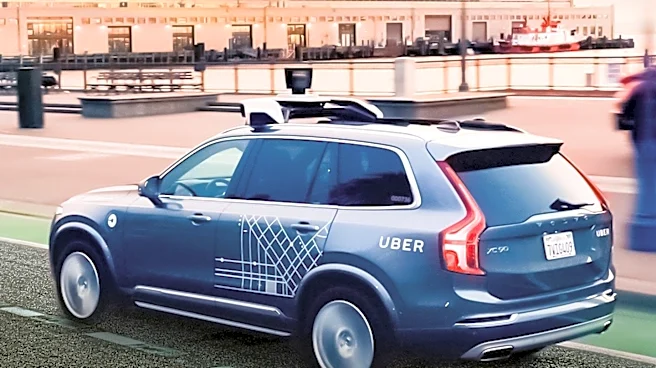
Uber is actively recruiting for an AV Remote Support Team Lead position in Phoenix, Arizona, specifically for an overnight shift. This role is part of the Customer Advocacy and Solutions (CAS) organization and focuses on providing real-time support to autonomous
vehicles (AVs) operating in live environments. The Team Lead will be responsible for managing a team of AV Remote Support Specialists who handle complex, real-time AV scenarios. Key responsibilities include coaching and developing team members, ensuring safe and efficient AV operations, and leading improvements in support logic and processes. The position requires 1+ years of people management experience and is 100% onsite.
Why It's Important?
This job opening signifies Uber's continued investment and expansion in autonomous vehicle technology and its operational support infrastructure. The need for an overnight AV Remote Support Team Lead highlights the 24/7 nature of autonomous vehicle operations and the critical role human oversight plays in ensuring safety and efficiency, even as the technology advances. This position is crucial for bridging the gap between cutting-edge AI and real-world operational challenges, ensuring that autonomous vehicles can navigate unforeseen circumstances with human assistance. It also indicates the creation of specialized jobs within the tech sector that combine leadership, operational excellence, and deep subject matter expertise in AV support systems, contributing to the growth of the autonomous driving industry in the U.S.
What's Next?
The recruitment for this role suggests that Uber is scaling up its autonomous vehicle operations, particularly in locations like Phoenix, which are often testbeds for AV technology. As Uber continues to develop and deploy more autonomous vehicles, there will likely be an increased demand for similar specialized support roles, both in remote operations and field support. This expansion could lead to further job creation in the tech and automotive sectors, particularly in areas related to AI, robotics, and real-time operational management. The insights gained from these support teams will also be vital for refining AV software and hardware, contributing to the overall safety and reliability of autonomous transportation systems.
Beyond the Headlines
Beyond the immediate job function, this role underscores the complex interplay between human intelligence and artificial intelligence in critical applications. It highlights the ongoing necessity for human intervention and decision-making in autonomous systems, especially in edge cases or unexpected scenarios. Ethically, it raises questions about the division of responsibility between AI and human operators in the event of incidents, and the training required for humans to effectively manage AI systems. Culturally, it represents a shift in the nature of work, where human roles are evolving from direct operation to oversight, management, and problem-solving for advanced technological systems. This position is a microcosm of the broader societal integration of AI and the development of new human-AI collaborative work models.