






What's Happening?
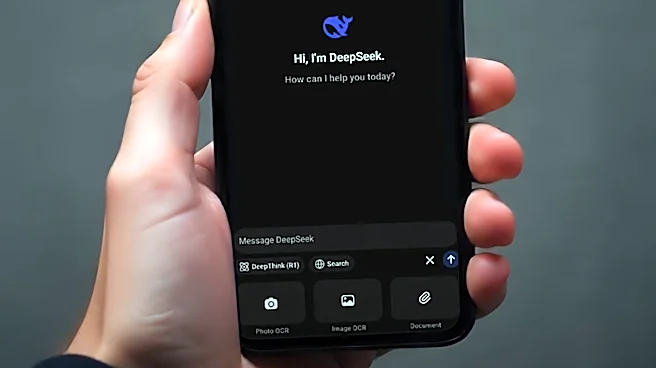
On November 1, 2026, Chinese artificial intelligence lab DeepSeek introduced an advanced coding agent designed to compete in the developer tools market. This new tool aims to challenge the dominance of U.S. firms such as Anthropic, OpenAI, and GitHub
Copilot. DeepSeek's agent is engineered for automated code generation, debugging, and refactoring across various programming languages. Its underlying architecture is optimized for programming workflows, having been trained on curated repositories and technical documentation. A key feature is its ability to process entire codebases, enabling architectural refactoring across multiple files while preserving existing code style and commenting conventions. The service is accessible through a web interface and an API, utilizing a token-based pricing model. While early benchmarks suggest competitive performance, independent validation is still limited. DeepSeek positions its product as a cost-competitive alternative to Anthropic's Claude family, claiming comparable accuracy in languages like Python, JavaScript, and Java.
Why It's Important?
This launch signifies a strategic push by a Chinese AI lab into a specialized programming assistance segment largely dominated by U.S. providers. The introduction of a competitive, potentially more affordable, alternative could disrupt the existing market landscape for developer tools. For U.S. technology companies, this means increased competition, potentially driving further innovation and pricing adjustments in the sector. The ability of DeepSeek's agent to handle entire codebases and maintain coding conventions could appeal to a broad range of developers and enterprises, potentially shifting market share. The focus on cost-effectiveness also makes it an attractive option for businesses looking to optimize their development expenditures. This development underscores the global race in artificial intelligence and the increasing capability of non-U.S. entities to produce advanced AI solutions that directly challenge established Western leaders.
What's Next?
DeepSeek's next steps will likely involve securing broader adoption among developers and enterprises. While the agent is currently available via a web interface and API, the company has not yet announced integrations with major integrated development environments (IDEs) like Visual Studio Code or JetBrains products. Such integrations would be crucial for widespread developer acceptance and ease of use. Further independent validation of its performance and accuracy will also be critical for building trust and market credibility. The response from U.S. competitors, such as Anthropic, OpenAI, and GitHub Copilot, will be important to watch, as they may accelerate their own innovations or adjust their strategies to counter this new challenge. The long-term impact will depend on DeepSeek's ability to continuously improve its agent, expand its features, and effectively market its solution to a global developer community.
Beyond the Headlines
The emergence of advanced AI coding agents from China, directly competing with U.S. counterparts, highlights a broader geopolitical and technological shift. This competition extends beyond mere market share, touching upon issues of data sovereignty, intellectual property, and national technological leadership. The training methodology and data sources used by DeepSeek, particularly if they involve large volumes of code from various origins, could raise questions about intellectual property rights and open-source compliance. Furthermore, the development of such sophisticated tools by a Chinese entity could influence national security considerations, especially concerning the potential for dual-use technologies. The increasing sophistication of AI tools also brings ethical considerations regarding the future of human labor in software development and the potential for AI-generated code to introduce new vulnerabilities or biases if not rigorously vetted.