


What's Happening?
Volvo Cars has unveiled its most ambitious global product strategy in its 99-year history, planning to introduce 13 new vehicles by the end of 2030. This initiative includes a mix of electric vehicles (EVs) and third-generation hybrids. Seven of these
new models are specifically slated for the U.S. and European markets, while the remaining six will be tailored for the Chinese market, developed in collaboration with sibling company Geely. The company aims to diversify its product range beyond its current SUV-heavy lineup, with Volvo Cars president and CEO Håkan Samuelsson indicating a shift towards new segments. This strategic pivot comes as EV adoption rates have lagged expectations in various markets, prompting a re-evaluation of the company's previous 'all-in' EV goal by the decade's end. The new vehicles for Western markets will utilize the SPA2 platform, also used by the EX90, and the SPA3 platform of the EX60.
Why It's Important?
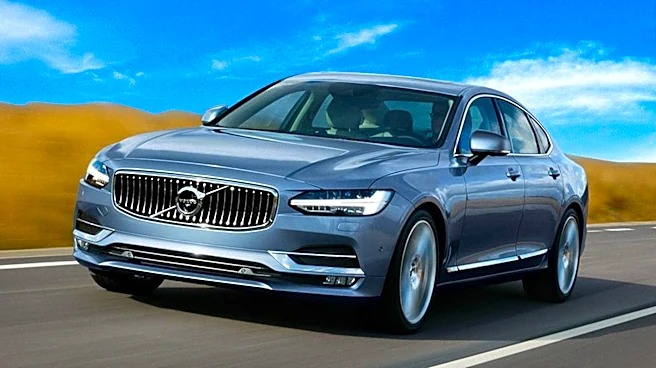
This significant product expansion by Volvo holds considerable importance for the U.S. automotive market. By introducing seven new models, including potential electric sedans and wagons under iconic names like S60 and V70 as early as 2028, Volvo aims to capture a broader customer base and increase its market share. The diversification beyond SUVs addresses evolving consumer preferences and market demands, particularly as the pace of EV adoption has been slower than anticipated. This move could intensify competition within the premium automotive segment, challenging established players and offering U.S. consumers more choices in both electric and hybrid vehicles. For Volvo, it represents a strategic adjustment to market realities, balancing its electrification goals with the continued demand for hybrid options, thereby mitigating risks associated with an exclusive focus on EVs. The reintroduction of sedans and wagons could also appeal to a niche but loyal customer segment in the U.S. that has expressed a desire for these body styles.
What's Next?
Volvo's immediate next steps involve the rollout of these 13 new models between now and 2030, with a particular focus on the seven vehicles destined for the U.S. and European markets. The company is expected to reveal more details about these specific models, including their features, pricing, and launch timelines. A new design language for Volvo is anticipated to debut next year, coinciding with the carmaker's 100th-anniversary celebrations, which may also include revisions to interior design, potentially reintroducing more physical buttons to the center console. This shift in design philosophy, as noted by design chief Thomas Ingenlath, aims to optimize the user experience by leveraging touchscreens for flexible displays while retaining physical controls for frequently used functions. Consumers can anticipate a gradual transformation of Volvo's showrooms as these new vehicles, including potential electric sedans and wagons, become available, offering a wider array of choices in the coming years.
Beyond the Headlines
Beyond the immediate product launches, Volvo's strategic shift reflects a broader industry trend of adapting to the complexities of the electric vehicle transition. The initial aggressive push towards an all-electric future by many automakers, including Volvo, is now being tempered by real-world challenges such as slower-than-expected consumer adoption, infrastructure limitations, and evolving regulatory landscapes. Volvo's decision to expand its hybrid offerings alongside EVs demonstrates a pragmatic approach to market dynamics, acknowledging that a diverse powertrain strategy may be necessary to achieve long-term growth and profitability. This move could influence other automakers to re-evaluate their own electrification timelines and product portfolios, potentially leading to a more balanced and gradual transition away from internal combustion engines. Furthermore, the potential reintroduction of sedans and wagons signals a recognition of the importance of design diversity and consumer choice, moving away from an SUV-dominated market and potentially revitalizing interest in other vehicle segments.