




What's Happening?
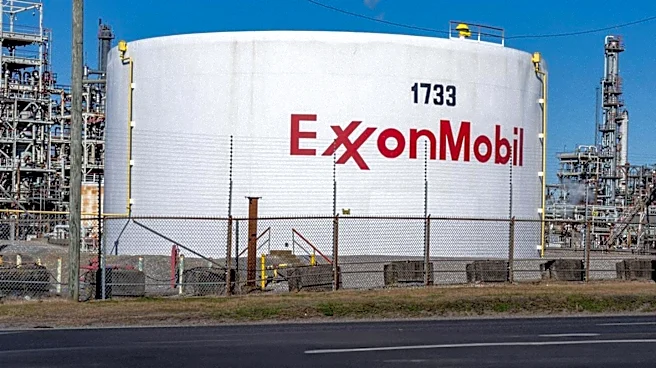
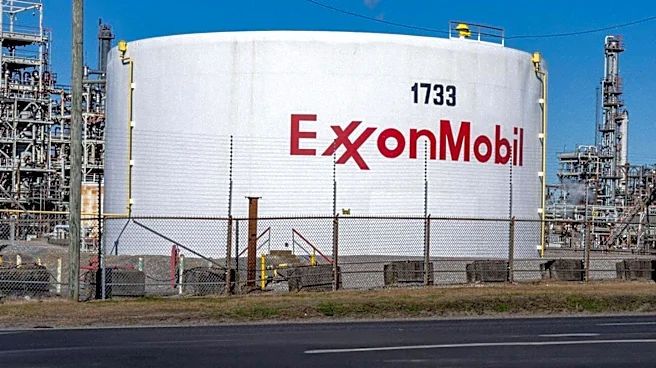
ExxonMobil, a major U.S. oil company, is considering re-establishing operations in Venezuela, nearly two decades after its departure. The company recently signed a memorandum of understanding (MOU) with the Venezuelan government and its state-owned oil company, Petróleos
de Venezuela, S.A. (PDVSA). This non-binding agreement signifies ExxonMobil's interest in evaluating potential 'upstream opportunities,' which involve oil exploration and production. ExxonMobil had a long history in Venezuela but left in 2007 after then-President Hugo Chávez nationalized its assets and forcibly renegotiated contracts. A U.S. court in September 2025 ordered Venezuela to pay ExxonMobil over $985 million for these past expropriations. The potential return follows significant changes in Venezuela's petroleum law this year, aimed at attracting international oil companies by offering more operational control in partnerships and reforming taxes and royalties. Other U.S. oil companies, including Chevron and Continental Resources, have already expanded their presence in the country.
Why It's Important?
ExxonMobil's potential return to Venezuela holds significant implications for the U.S. energy sector and international oil markets. Venezuela possesses substantial oil reserves, particularly in the Orinoco Belt, which could contribute to global oil supply if developed. For ExxonMobil, re-entry could unlock access to these reserves, potentially boosting its production capacity and profitability. However, the move also carries risks, given the country's history of political instability and asset nationalization. The Venezuelan government's recent reforms to its petroleum law are crucial in making the country more attractive to foreign investors, signaling a shift towards a more favorable business environment. This development could also influence other international oil companies to consider investments in Venezuela, potentially increasing competition and diversifying global oil sources. The decision also highlights the complex interplay between geopolitical factors, energy security, and corporate investment strategies, especially in regions with high resource potential but a challenging political landscape.
What's Next?
The memorandum of understanding is a preliminary step, and any future investment by ExxonMobil in Venezuela would necessitate stable policies, clear regulations, robust investment protections, and competitive returns, according to the company. ExxonMobil CEO Darren Woods previously expressed concerns about Venezuela's investment climate, labeling it 'uninvestable' earlier this year. However, the recent legal and fiscal reforms by the Venezuelan government indicate a concerted effort to address these concerns. The next phase will likely involve detailed evaluations of specific oil fields, potentially in the Orinoco Belt, and further negotiations to establish concrete investment terms. The success of these discussions will depend on the Venezuelan government's ability to demonstrate a sustained commitment to a stable and predictable operating environment for foreign companies. The outcome could set a precedent for other international energy firms eyeing opportunities in Venezuela.
Beyond the Headlines
Beyond the immediate business implications, ExxonMobil's potential re-engagement with Venezuela raises broader questions about energy policy, environmental impact, and corporate responsibility. The Orinoco Belt, a region of interest, is known for its heavy oil, the extraction of which is often associated with higher greenhouse gas emissions, particularly methane. This aspect could draw scrutiny from environmental groups and stakeholders concerned about climate change, especially given ExxonMobil's stated vision to lead in energy innovations that reduce emissions. The historical context of asset nationalization and the ongoing territorial dispute between Venezuela and Guyana, where ExxonMobil also has significant investments, add layers of complexity. The company's decision to return, despite past challenges, underscores the strategic importance of Venezuela's oil reserves in the global energy landscape and the continuous balancing act between economic opportunity and geopolitical risks.