






What's Happening?
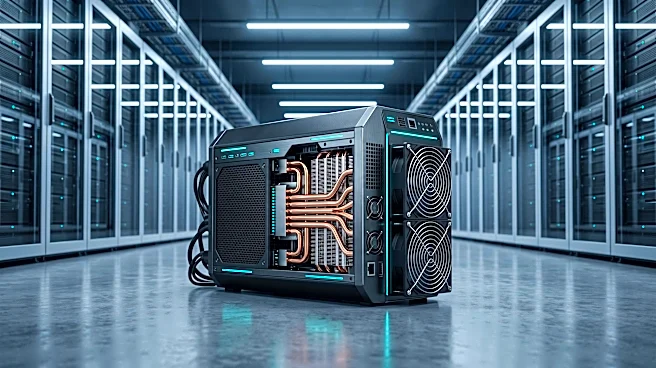
Tether has announced significant industry support for its open automation toolkit, designed to streamline the operation of Bitcoin mining equipment. This initiative, revealed on October 24, brings together 15 industry participants, including major players
like Bitdeer, Bitmain, Canaan, MicroBT, Foundry, and Block’s Proto. The toolkit aims to shift the focus in Bitcoin mining from simply acquiring more machines to optimizing the efficiency and interoperability of existing infrastructure. The core challenge it addresses is connecting diverse mining fleets and supporting equipment through a common interface, eliminating the need for operators to build separate control systems for each vendor. The toolkit's product description outlines equipment adapters, a core runtime, and a gateway for applications, allowing for consistent monitoring and control even as hardware components change.
Why It's Important?
This development is important for the U.S. Bitcoin mining industry as it seeks to enhance operational efficiency and reduce engineering complexities. By providing a standardized open software framework, Tether's toolkit could lead to significant cost savings and improved performance for mining operations. U.S. mining companies, often operating with mixed fleets of equipment from various manufacturers, currently face the challenge of integrating disparate systems. This toolkit offers a potential solution to this fragmentation, allowing for more reliable and consistent control over their infrastructure. The commitment from prominent industry participants suggests a collective move towards greater standardization and automation, which could make U.S. Bitcoin mining more competitive and resilient against market fluctuations and technological changes. Reduced integration costs and improved operational control could directly impact the profitability and sustainability of mining businesses.
What's Next?
The immediate next steps involve the continued development and implementation of the toolkit's integrations. The participating companies are committed to building and maintaining these integrations, which will be crucial for the toolkit's success. While a demonstration environment with mock hardware is already available for developers to examine the design, the real test will be in successful installations and measured operating improvements across different live industrial sites. The focus will be on demonstrating dependable control and tangible benefits, such as electricity savings or higher mining margins, which are currently site-specific and not universally quantified by the toolkit. The industry will be watching for maintained adapters and successful deployments to validate the toolkit's effectiveness in real-world scenarios.
Beyond the Headlines
Beyond the immediate operational benefits, Tether's open automation toolkit could trigger a broader shift in the Bitcoin mining ecosystem. By fostering greater interoperability and standardization, it could reduce barriers to entry for new mining operations and encourage innovation in mining hardware and software. The emphasis on an open interface also promotes transparency and inspectability of control systems, which is crucial for ensuring the reliability and security of automated operations. This move could also influence the long-term sustainability of Bitcoin mining by optimizing energy consumption and resource allocation. Furthermore, the collaborative effort among major industry players signals a maturing industry that is increasingly focused on infrastructure and efficiency, rather than just raw computational power. This could lead to a more robust and decentralized global Bitcoin network, with U.S. operations playing a key role in driving these advancements.