





What's Happening?
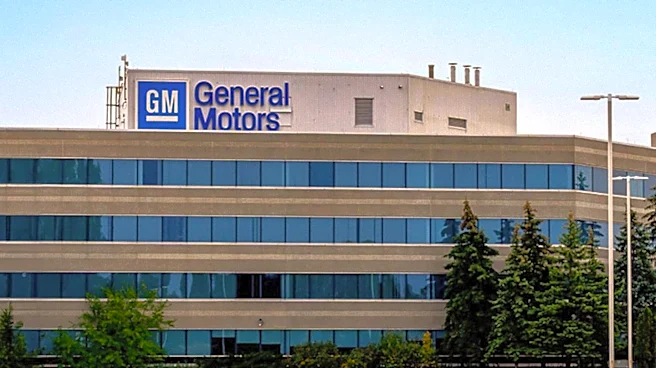
General Motors (GM) is actively seeking a Senior Artificial Intelligence Machine Learning Scientist to advance its efforts in redefining mobility through human-centered design and intelligent software. This role focuses on designing and deploying advanced
machine learning solutions for vehicle lifecycle management, diagnostics, and predictive maintenance. The scientist will work with complex vehicle and engineering data, utilizing large language models (LLMs), generative AI, and real-time inference systems to develop scalable solutions for automotive applications. Initially, the focus will be on 12-volt battery health, with plans to extend these approaches to infotainment and other vehicle systems. The objective is to generate earlier and more precise insights, helping engineers and service teams recognize and resolve issues faster, thereby improving product quality and service outcomes.
Why It's Important?
This initiative by General Motors is significant for the U.S. automotive industry, as it represents a substantial investment in leveraging advanced AI and machine learning to enhance vehicle reliability and customer experience. By improving predictive maintenance and diagnostics, GM can reduce warranty claims, decrease service visits, and ultimately lower operational costs. This focus on intelligent software and intuitive design aligns with broader industry trends towards smarter, more connected vehicles, which can give GM a competitive edge in the market. The application of AI to complex engineering challenges also contributes to the development of a more robust and efficient automotive ecosystem, benefiting consumers through safer and more dependable vehicles. Furthermore, it signifies the growing importance of data science and AI expertise within traditional manufacturing sectors.
What's Next?
General Motors will continue to integrate advanced AI and machine learning capabilities into its vehicle development and service operations. The successful candidate for the Senior AI/ML Scientist position will play a crucial role in building and deploying foundational machine learning models, developing anomaly detection systems, and creating predictive capabilities for various vehicle components. This will lead to more proactive maintenance strategies and faster issue resolution across GM's fleet. Future developments will likely include the expansion of AI applications beyond battery health to other critical vehicle systems, further enhancing the intelligence and autonomy of GM's product line. The company's commitment to these technologies suggests ongoing innovation in automotive software and a continued push towards a future of safer, smarter, and more connected transportation.
Beyond the Headlines
GM's push into advanced AI for vehicle diagnostics and maintenance reflects a broader transformation within the automotive industry, moving beyond mechanical engineering to become a software-driven sector. This shift has profound implications for the workforce, requiring new skill sets in data science, AI, and software development. It also raises questions about data privacy and security, as vehicles collect and transmit vast amounts of operational data. The ability to predict and prevent vehicle failures through AI could significantly alter the traditional service model, potentially leading to more subscription-based maintenance services and a closer relationship between manufacturers and vehicle owners. This technological evolution also contributes to the overall vision of smart cities and integrated transportation systems, where vehicles communicate and operate with unprecedented levels of intelligence.