








What's Happening?
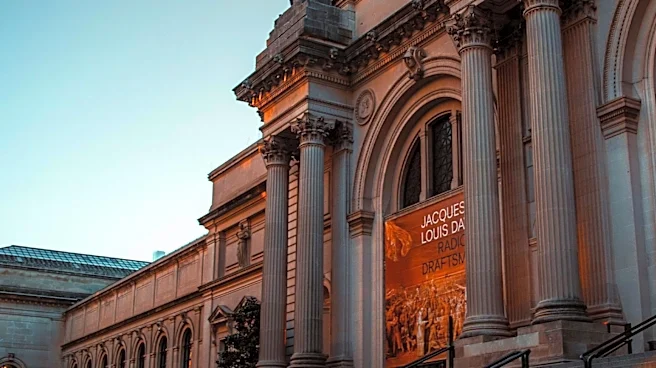
The Metropolitan Museum of Art in New York is currently hosting 'Ecologies of Painting,' a special installation showcasing European paintings from approximately 1525 to 1775. This exhibition includes works by renowned artists such as Bruegel and Poussin.
The focus of the installation is to explore the evolving depiction of humanity's relationship with nature throughout this period. One notable piece highlighted is Bruegel's 'The Harvesters,' where a woman is depicted stooping to gather wheat, her form blending with the crop. The museum's commentary on this painting points out that it hung in a wealthy Antwerp merchant's dining room, omitting the harsh realities of the labor involved. The exhibition, located in Gallery 638, features ten European paintings, nine of which are from the Met's own collection. It aims to illustrate a shift in perspective from nature as something people inhabit to something they possess. The installation is included with general Met admission and will run until January 17, 2027.
Why It's Important?
This exhibition is significant for several reasons, particularly in its re-contextualization of historical art. By focusing on the 'Ecologies of Painting,' the Metropolitan Museum of Art encourages viewers to consider the socio-economic and environmental narratives embedded within these classic works. The interpretation of Bruegel's 'The Harvesters,' for instance, prompts a deeper reflection on labor, class, and the selective portrayal of reality in art commissioned by the wealthy. This approach can influence how art history is taught and understood, fostering a more critical engagement with historical artifacts. For the public, it offers a fresh perspective on familiar masterpieces, potentially sparking discussions about contemporary issues like environmental stewardship and social inequality through the lens of historical art. The exhibition also reinforces New York City's status as a global cultural hub, attracting art enthusiasts and scholars, and contributing to the city's vibrant cultural economy.
What's Next?
The 'Ecologies of Painting' exhibition is scheduled to continue until January 17, 2027, offering a prolonged opportunity for public engagement. Over the next few years, the Metropolitan Museum of Art will likely continue to promote the exhibition through various educational programs, guided tours, and digital content to maximize its reach and impact. Art critics and scholars are expected to publish further analyses and interpretations of the themes presented, potentially leading to broader academic discourse on the intersection of art, history, and environmental studies. The success of this thematic approach could also influence future curatorial decisions at the Met and other major art institutions, encouraging more exhibitions that explore social and ecological narratives within historical art collections. The ongoing presence of such significant works will continue to draw both local and international visitors to the museum.
Beyond the Headlines
Beyond the immediate artistic appreciation, the 'Ecologies of Painting' exhibition delves into profound ethical and cultural dimensions. The curatorial decision to highlight the 'unseen' aspects of paintings, such as the labor omitted from Bruegel's 'The Harvesters,' challenges traditional art viewing practices that often prioritize aesthetic beauty over social commentary. This approach encourages a more critical and empathetic engagement with art, prompting viewers to question whose stories are told and whose are left out in historical narratives. It also subtly addresses the long-standing human tendency to romanticize or exploit nature, a theme that resonates strongly with contemporary environmental concerns. By presenting art as a mirror of societal values and power structures, the exhibition fosters a deeper understanding of how historical perspectives continue to shape modern thought and behavior regarding nature and labor. This critical lens can inspire a re-evaluation of cultural heritage and its relevance to current global challenges.