
What's Happening?
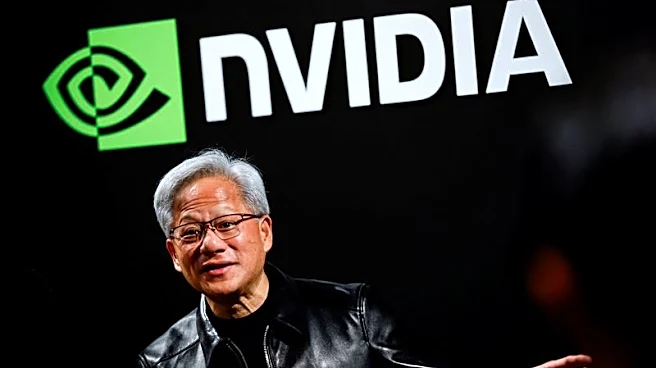
Jensen Huang's abrupt resignation as Nvidia's chief executive has caused significant concern among Silicon Valley AI startups and investors. Huang, a co-founder of Nvidia, was known for his strong advocacy
and financial support for startups, with Nvidia holding $48 billion worth of stakes in 229 private companies, including major players like OpenAI and Anthropic, as of July. He was also instrumental in providing startups with access to crucial AI chips and championed 'open source' and 'open weight' technology. His departure is seen as a major loss for the startup ecosystem, with one investor likening it to 'the central bank of A.I.' losing its chairman. This comes amidst a jittery market, fears of an AI bubble, and potential regulatory changes.
Why It's Important?
Jensen Huang's role extended beyond leading Nvidia; he was a critical financier and enabler for the broader AI startup ecosystem. His resignation creates a significant void, as Nvidia's investments and provision of computing power were vital for many emerging AI companies. Without his direct influence and advocacy, startups may face increased challenges in securing funding and accessing the high-powered chips necessary for their development. This could slow down innovation in the AI sector, potentially impacting the U.S.'s competitive edge in artificial intelligence. The uncertainty also exacerbates existing market anxieties about a potential AI bubble and the impact of future regulations.
What's Next?
The AI startup world will likely face a period of adjustment as companies and investors assess the implications of Huang's departure. Startups that relied on Nvidia's funding or access to chips may need to seek alternative sources of capital and computing power. Nvidia's new leadership will need to clarify its strategy regarding startup investments and support programs, which could either reassure or further unsettle the market. The incident could also prompt a re-evaluation of the concentration of power and resources within the AI industry, potentially leading to calls for more diversified funding and chip supply chains to mitigate future risks associated with the departure of key figures.
Beyond the Headlines
Jensen Huang's departure highlights the outsized influence that individual leaders can have on entire industries, particularly in rapidly evolving sectors like AI. His personal commitment to fostering startups created a unique ecosystem of support that now faces an uncertain future. This situation underscores the fragility of innovation when it is heavily reliant on a single entity or individual. It also raises questions about the long-term sustainability of an industry where a significant portion of funding and critical resources are channeled through one dominant player. The event could serve as a catalyst for the AI community to consider more robust, decentralized models of support and development to ensure resilience against such leadership changes.