
What's Happening?
EDECS Group has been awarded a Design & Build contract by DP World for the structural strengthening and upgrade of the quay wall at DP World’s container terminal in the Port of Luanda, Angola. This project,
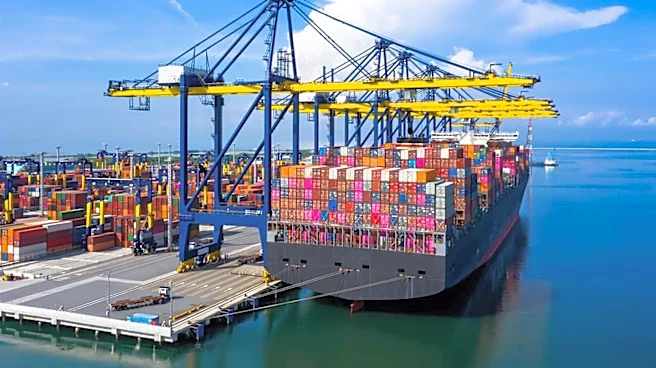
covering the entire 610-meter length of the existing quay wall, aims to enable the terminal to introduce rail-mounted Ship-to-Shore (STS) gantry cranes. The upgrade involves a comprehensive package of structural, piling, crane infrastructure, and utility works. EDECS will install 120 piles, each 1.0 meter in diameter and up to 45 meters long, supported by extensive testing. Additionally, a new reinforced concrete back beam will be constructed, the existing capping beam extended, and a complete crane rail system with associated quay furniture installed. The project also includes all necessary infrastructure and utility works for the reliable operation of the new STS cranes, such as wet and dry utilities, cables, quay substations, and fire-fighting networks. This initiative is a significant step in modernizing the port's cargo-handling capabilities.
Why It's Important?
The modernization of the Port of Luanda is crucial for enhancing Angola's maritime trade connectivity and strengthening its role as a key container gateway along the West and Southern African coast. The transition from mobile harbor cranes to rail-mounted STS gantry cranes will significantly improve operational efficiency by enabling faster vessel loading and unloading, reducing vessel turnaround times, and substantially increasing cargo-handling throughput. This upgrade will also allow the terminal to accommodate larger, deeper-draft vessels, which is vital for handling the growing global container shipping capacity. For U.S. businesses engaged in international trade, particularly those with interests in African markets, improved port infrastructure in key regions like Angola can lead to more efficient supply chains, reduced shipping costs, and faster delivery of goods. This development could also open new trade routes and opportunities, benefiting U.S. importers and exporters by streamlining logistics and enhancing market access in the region.
What's Next?
The project will proceed with the installation of 120 piles and the construction of new infrastructure, including a reinforced concrete back beam and an extended capping beam. EDECS Group will also supply and install the complete crane rail system and associated quay furniture, along with all necessary utility works for the new STS cranes. Upon completion, the Port of Luanda will transition to using rail-mounted STS gantry cranes, which is expected to significantly enhance its vessel-handling capabilities and overall productivity. This modernization is part of DP World’s broader strategy to upgrade port infrastructure across Africa, building on previous collaborations with EDECS Group in projects like the Dar es Salaam Seaport in Tanzania. The successful implementation of this project will likely serve as a model for future port modernization efforts in the region, further consolidating Luanda’s position as a strategic trade gateway.
Beyond the Headlines
This infrastructure upgrade in Luanda reflects a broader trend of strategic investment in maritime logistics across developing regions, driven by the increasing demands of global trade and the need for greater efficiency and capacity. The shift to advanced STS gantry cranes not only boosts operational metrics but also signifies a commitment to adopting cutting-edge technology in port management. This move can have long-term economic implications, fostering regional economic growth by facilitating trade and attracting further investment. Ethically, such large-scale infrastructure projects often bring job creation and economic opportunities, but also necessitate careful consideration of environmental impacts and local community engagement. The partnership between EDECS Group and DP World highlights the growing collaboration between international contractors and global port operators in shaping the future of maritime commerce, potentially setting new standards for port development and operational excellence in Africa.