







What's Happening?
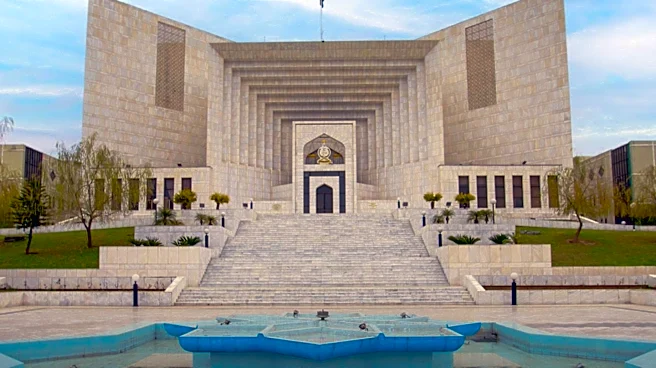
The Supreme Court of Pakistan has ruled that payments received by Attock Refinery Limited (ARL) for decanting and desalting crude oil do not constitute taxable supplies or activities under Section 3 of the Sales Tax Act, 1990. This decision overturns
judgments by the Islamabad High Court and the Appellate Tribunal Inland Revenue. The controversy arose because, while crude oil suppliers were contractually responsible for these processes, ARL undertook them at its own premises and received payments from suppliers. Tax authorities had previously treated these payments as consideration for taxable services. The Supreme Court, led by Justice Munib Akhtar, determined that the crude oil remained the same identifiable product before and after processing, and no separate product was created. Furthermore, the court found that the payments were an adjustment to the crude oil price rather than a fee for services rendered to suppliers. The ruling emphasizes that for sales tax to apply, there must be a taxable supply made in the course of a taxable activity, and both elements must be independently established.
Why It's Important?
This Supreme Court ruling is significant for the oil and gas sector in Pakistan, particularly for refineries and exploration companies. By clarifying that payments for essential crude oil processing like decanting and desalting are not subject to sales tax, the decision provides greater financial predictability and potentially reduces operational costs for companies like Attock Refinery Limited. This could encourage investment in refining infrastructure and operations, as companies will have a clearer understanding of their tax liabilities. The ruling also reinforces a crucial principle of tax jurisprudence: the burden of proof for establishing all elements of a taxing event rests with the state, not the taxpayer. This legal precedent could influence future tax disputes in other industrial sectors, ensuring that tax authorities cannot impose liabilities based solely on their interpretation of commercial transactions without meeting statutory requirements. For the broader economy, reduced tax burdens on critical industries can lead to more competitive pricing and potentially stimulate growth.
What's Next?
Following this Supreme Court decision, Attock Refinery Limited and other similar entities in Pakistan's oil and gas sector can expect a clearer tax landscape regarding crude oil processing activities. The ruling sets a precedent that may lead to a review of similar tax assessments and potentially result in refunds or adjustments for companies that have previously paid sales tax on such activities. Tax authorities will need to align their interpretations and enforcement practices with this judicial clarification. The decision could also prompt legislative review or amendments to the Sales Tax Act, 1990, to explicitly define or exclude such processing activities if the government wishes to alter the tax treatment in the future. For now, the focus will likely be on implementing the court's judgment and ensuring compliance across the industry, potentially fostering a more stable regulatory environment for energy companies.
Beyond the Headlines
The Supreme Court's decision extends beyond immediate financial implications, touching upon the fundamental relationship between commercial practice and tax law. It highlights the importance of precise statutory definitions in taxation and the judiciary's role in interpreting these definitions to prevent overreach by tax authorities. The emphasis on the 'identifiable product' and the nature of payments as 'price adjustment' rather than 'service consideration' could influence how other complex industrial processes are categorized for tax purposes. This ruling underscores a broader legal principle that commercial realities must be carefully considered when applying tax statutes, rather than relying on a superficial interpretation. It also serves as a reminder of the checks and balances within the legal system, where judicial review can correct administrative interpretations that deviate from legislative intent, ultimately impacting the ease of doing business and investor confidence in the country.