

What's Happening?
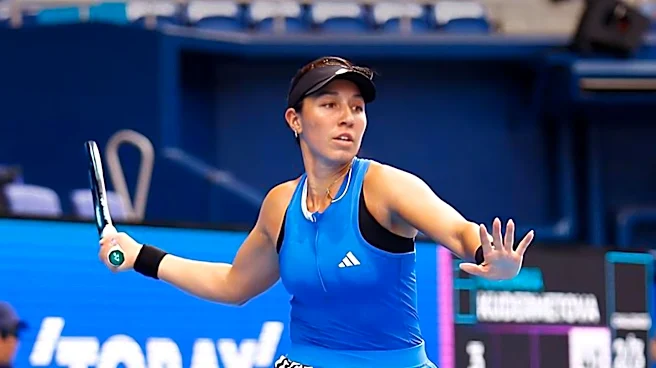
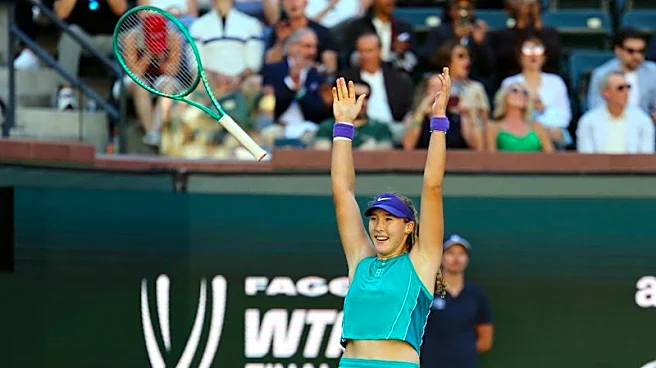
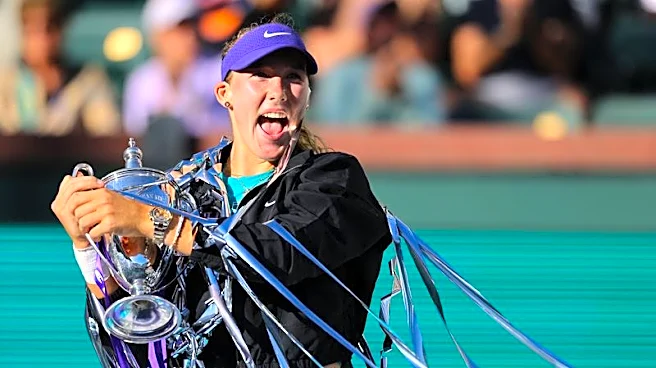
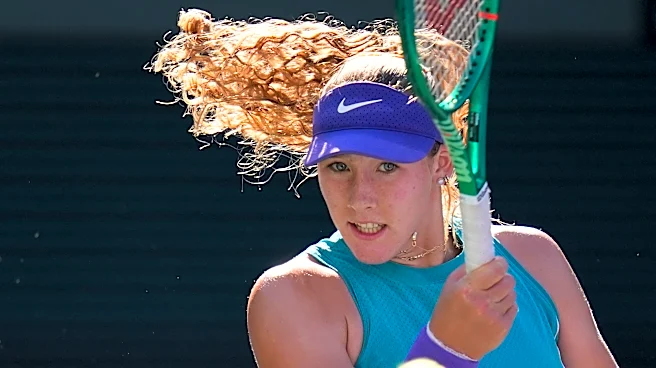
WTA President Valerie Camillo has commented on the controversy involving Jessica Pegula and Mirra Andreeva, stating that 'a little drama isn't a bad thing' for the sport. The incident occurred during a practice session before the WTA Finals, where Pegula was
caught on a hot mic calling Andreeva a 'diva' and criticizing her coach. The WTA apologized and removed the footage, but the event became a major talking point. Camillo clarified that the controversy was not staged, attributing Pegula's remarks to 'competitor banter.' She acknowledged that the handling of microphones did not meet the organization's standards but suggested that such drama can be beneficial for ticket sales, viewership, and commentary, drawing parallels to other major sports leagues like the NBA and MLB.
Why It's Important?
The WTA President's perspective on the Pegula-Andreeva controversy highlights a strategic approach to managing public relations in professional sports. By framing the 'drama' as beneficial, the WTA acknowledges the entertainment value of player rivalries and candid moments, even if they arise from unforeseen circumstances. This stance can influence how the organization handles future incidents, potentially balancing the need for professionalism with the desire to generate buzz and attract audiences. For U.S. sports fans and media, this suggests that the WTA is embracing a more dynamic and personality-driven narrative, which could increase engagement but also risks alienating those who prefer a more traditional, controversy-free presentation of the sport. It also raises questions about the ethical boundaries of leveraging player interactions for promotional purposes.
What's Next?
The WTA will likely continue to navigate the balance between maintaining a professional image and allowing for the natural drama that arises from competitive sports. While the organization acknowledged shortcomings in microphone management, the overall sentiment suggests a willingness to accept, and even capitalize on, such incidents for promotional gain. This approach could lead to more candid content being shared, potentially increasing fan engagement but also requiring more robust guidelines for player conduct and media interactions. Future WTA events might see a more deliberate integration of player personalities and rivalries into their marketing strategies, while also ensuring that any 'drama' remains within acceptable bounds to avoid negative backlash.
Beyond the Headlines
The WTA President's comments reflect a broader trend in sports and entertainment where authenticity and 'unscripted' moments are highly valued by audiences. In an era of pervasive social media and constant content consumption, organizations are increasingly looking for ways to create compelling narratives that go beyond the game itself. However, this strategy carries inherent risks, as 'drama' can quickly devolve into genuine conflict or negative publicity if not managed carefully. The incident also touches upon the evolving relationship between athletes and the media, where the lines between public and private are increasingly blurred, and every interaction can become a public spectacle. This necessitates a re-evaluation of privacy expectations for professional athletes and the responsibilities of sports organizations in protecting their players while also promoting the sport.