








What's Happening?
Blackstone, a major private equity firm, is actively defending its investments in AI infrastructure debt, pushing back against growing investor anxiety following a significant selloff in CoreWeave's debt. Jas Khaira, Blackstone's head of AI investments,
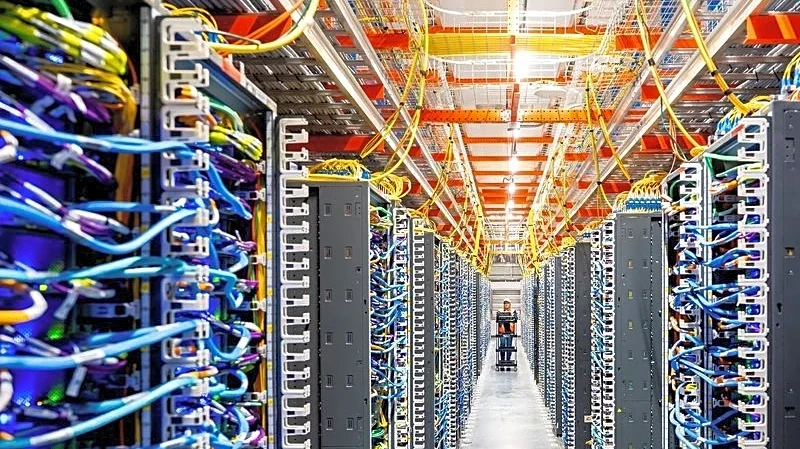
stated that market jitters are 'overblown' and that the underlying demand for AI compute continues to outstrip supply. This defense comes after CoreWeave's bonds tumbled into distressed territory, raising concerns about the financial sustainability of the AI industry's massive capital buildout. Blackstone has deployed billions into data centers and holds a significant stake in CoreWeave, making the stakes high for the firm. Khaira emphasizes that Blackstone's data center portfolio maintains high occupancy rates and long-term contracts with hyperscalers and AI companies provide revenue visibility, distinguishing their position from direct GPU infrastructure providers like CoreWeave.
Why It's Important?
The situation highlights a critical debate within the financial sector regarding the risks and sustainability of financing the rapidly expanding AI infrastructure. The repricing of AI infrastructure debt, with spreads widening across the sector, indicates investor skepticism about whether the enormous capital expenditures required for GPU clusters and power-hungry data centers can generate sufficient returns to service debt loads. Blackstone's confidence, rooted in its position in data center real estate and power infrastructure, suggests a belief that these assets offer more durable cash flows compared to direct GPU operations. This scenario is important because it could influence future investment strategies in the AI sector, potentially leading lenders to demand stricter terms, lower leverage, and tighter concentration limits for AI infrastructure financing. The outcome will determine whether the AI buildout is a sustainable investment or a potential bubble.
What's Next?
The market will closely watch CoreWeave's situation to see if it stabilizes or deteriorates further, serving as a real-time case study for AI infrastructure credit risk. Other heavily leveraged players in the AI space will face refinancing deadlines in the coming 12 months, which could further test the market's sentiment. The broader question of AI return on investment will become more measurable as the first wave of AI deployments mature. Blackstone's continued investment and defense of its AI debt position indicate a long-term commitment to the sector, but the firm will need to demonstrate that its thesis holds true amidst market volatility. The debate between AI bulls and bears regarding capital intensity and revenue generation will intensify, shaping the future of AI infrastructure financing.
Beyond the Headlines
The concerns surrounding AI infrastructure debt, particularly with CoreWeave, reveal a deeper tension between the rapid pace of technological innovation and the traditional constraints of financial markets. The 'AI arms race' demands unprecedented capital, pushing the boundaries of private credit and raising questions about systemic risk. If the AI buildout proves unsustainable, it could lead to significant financial losses for investors and lenders, potentially impacting the broader economy. Conversely, if Blackstone's confidence is validated, it could solidify AI infrastructure as a robust investment class. This situation also brings to light the ethical considerations of massive energy consumption by data centers and the environmental impact of the AI boom, which could become a more prominent concern as the industry scales. The long-term implications extend to how society values and funds transformative technologies, balancing innovation with financial prudence and environmental responsibility.