





What's Happening?
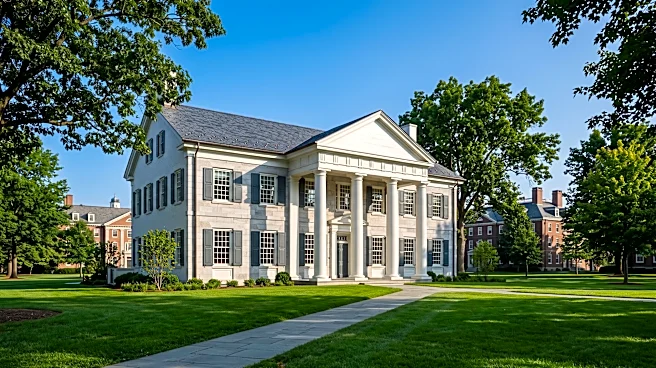
A historic fraternity house adjacent to Cornell University's West Campus is set to be transformed into an entrepreneurship institute. The former Phi Sigma Kappa fraternity house, a 9,660 square-foot Greek Revival structure built in 1902, will undergo
extensive interior and exterior renovations to become 'The Baker House.' This private club and think tank will cater to students and alumni entrepreneurs, with a specific focus on the real estate and hospitality industries. The project is financially supported by real estate developer and Cornell alumnus Richard Baker, who also made significant real estate acquisitions totaling $26 million near the university in July. These acquisitions include the Bellayre Apartments, Campus Hill Apartments, and Westbourne Lane Apartments, some of which are being repurposed to provide programmatic residences for Cornell students and alumni focused on entrepreneurship, starting in the fall of the 2027 academic year. The Baker House website indicates plans for a living and learning community, including a boot camp and remote learning program, and will feature amenities such as a private restaurant, bar, social lounge, gym, Nordic-style spa, and creative studios.
Why It's Important?
This development signifies a growing trend in repurposing historical university properties for modern educational and entrepreneurial endeavors. The investment by Richard Baker, a prominent real estate developer and Cornell alumnus, highlights the increasing private sector involvement in supporting higher education initiatives, particularly in specialized fields like real estate and hospitality. The creation of 'The Baker House' as a dedicated entrepreneurship institute could foster innovation and provide practical experience for students and alumni, potentially leading to new businesses and economic growth in the region. The project also addresses the issue of dormant fraternity houses, offering a model for their revitalization and integration into the academic community. Furthermore, the acquisition of multiple apartment complexes by Baker's LLCs suggests a strategic effort to create a comprehensive ecosystem for these entrepreneurial programs, including housing solutions for participants. This initiative could serve as a blueprint for other universities looking to leverage alumni networks and private funding to enhance their entrepreneurial ecosystems.
What's Next?
The project aims for completion by August 2027. The City of Ithaca Planning & Development Board has declared itself the lead agency to review the plans, with initial responses ranging from excited to cautiously optimistic. The board's questions primarily focused on practical aspects such as permeable pavement and the accommodation of a seasonal tent for outdoor events. While 'The Baker House' is owned and operated independently of Cornell, the organization plans to collaborate with the university. The cost estimate for the renovation has not been disclosed. The former Campus Hill Apartments are being renovated for programmatic residence for Cornell students and alumni, while the former Bellayre Apartments and Westbourne Apartments, now under the 'Baker House Residence' moniker, are currently marketed as general-market housing. The project's progress will depend on the ongoing review process by the planning board and the successful execution of the extensive renovation plans.
Beyond the Headlines
The transformation of a former fraternity house into an entrepreneurship institute reflects a broader societal shift in how educational institutions and their alumni engage with real estate and community development. The project raises questions about the evolving role of fraternities and sororities in university life, as well as the potential for these historic structures to be reimagined for new purposes. The independent ownership and operation of 'The Baker House' while collaborating with Cornell could set a precedent for hybrid models of educational and private ventures. The focus on real estate and hospitality entrepreneurship is particularly noteworthy, given the significant economic impact of these sectors. This initiative could also influence local housing markets, as evidenced by Baker's substantial real estate acquisitions. The project's success could encourage further private investment in university-adjacent properties, potentially leading to more specialized living and learning communities and a more integrated town-gown relationship.