






What's Happening?
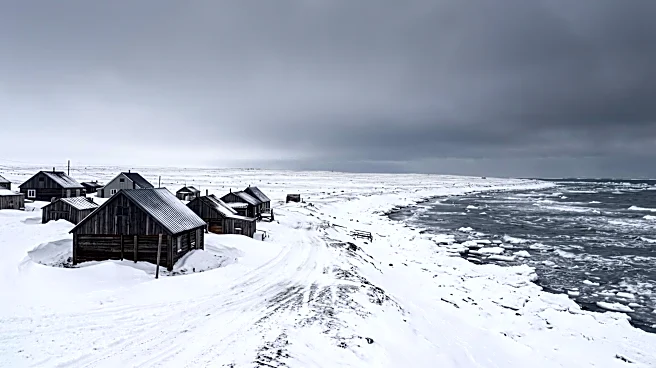
Author Mathilda Zeller has released her debut Indigenous folk horror novel, 'It Looks Like You in the Dark,' published by Tor Nightfire. The story is set in Chukchi, Alaska, in 1994, and centers on nineteen-year-old Tapeesa, who works at a fish plant
and hears warnings about the kushtuka from her grandmother. The narrative intensifies when a mining company establishes operations north of the village, and Tapeesa's younger sister, Esther, vanishes. The novel expands on Zeller's short story 'Kushtuka' from the anthology 'Never Whistle at Night.' It explores themes of a monster that takes on the appearance of loved ones and the impact of external forces on an Indigenous community. The book is described as a fierce debut rooted in real anger and a real place, blending traditional lore with contemporary horror elements.
Why It's Important?
This novel is significant for its contribution to Indigenous horror literature, offering a perspective that intertwines cultural folklore with modern societal challenges. By setting the story in an Inupiat village facing the arrival of a mining company, Zeller highlights the historical and ongoing conflicts between Indigenous communities and external industries. The 'monster' in the story serves as a metaphor for both supernatural threats and the destructive impact of outsiders on the land and its people. The narrative's focus on the fear of not being believed, particularly concerning the disappearance of a young Native woman, underscores critical social issues and the systemic neglect faced by these communities. This work enriches the horror genre by providing a culturally specific and politically charged narrative, moving beyond conventional tropes to explore deeper societal anxieties and injustices.
What's Next?
The novel 'It Looks Like You in the Dark' is billed as the first in a 'Kobuk Valley' series, with a deal already secured for a second novel focusing on the qalupalik, sea creatures from Inupiaq lore. This indicates a continued exploration of Indigenous folklore and themes within the horror genre by Mathilda Zeller. Readers can anticipate further stories that delve into the rich cultural heritage of Alaska Native communities and their encounters with both supernatural and human-made threats. The success of this debut may also pave the way for more Indigenous voices and narratives to gain prominence in mainstream publishing, fostering a broader understanding and appreciation of diverse storytelling traditions.
Beyond the Headlines
The novel delves into the ethical and cultural dimensions of resource extraction on Indigenous lands. The arrival of the mining company and the subsequent disappearance of Esther highlight the real-world consequences of industrial expansion on vulnerable communities, including environmental degradation and social disruption. The 'kushtuka,' a creature that mimics loved ones, symbolizes the insidious nature of threats that can appear familiar or benign but ultimately lead to harm. This narrative structure encourages readers to critically examine who benefits from such developments and the often-overlooked costs borne by local populations. The book's anger is a powerful undercurrent, reflecting a broader societal reckoning with historical injustices and the ongoing struggle for Indigenous sovereignty and cultural preservation.