







What's Happening?
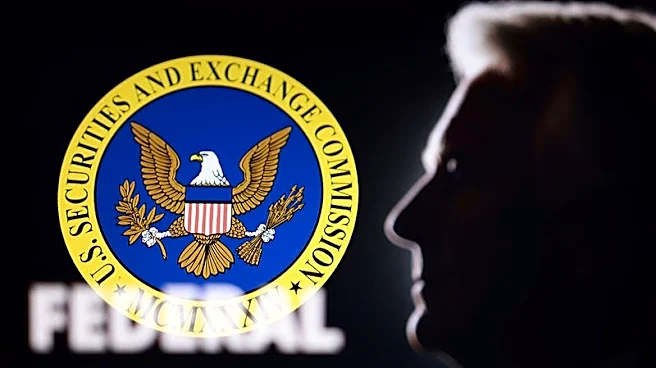
Bally's stock price experienced a significant drop after the company informed federal regulators that its debt concerns could have a "material adverse effect" on its business, financial conditions, and operations. Bally's operates two brick-and-mortar
casinos in Lincoln and Tiverton, an online casino, and a recently approved online sports betting venture in Rhode Island. Christopher Limnios, an economics professor at Providence College, views this warning to the Securities and Exchange Commission as a clear indication of the company's struggles. Governor Dan McKee stated that his office is in contact with Bally's and believes the state's revenues are currently protected. Bally's has a long-term agreement to invest $100 million into Bally's Twin River, with $39 million remaining until 2043.
Why It's Important?
Bally's significant presence in Rhode Island means its financial health is closely tied to the state's economy, particularly its gaming ecosystem. The potential for financial struggles at Bally's could impact state revenues derived from casino operations and online betting, which are crucial for public services and budgets. While Professor Limnios suggests that a company-wide bankruptcy would be required before any liquidation of Rhode Island assets, the warning itself creates uncertainty. This situation highlights the inherent risks associated with state reliance on revenue from a single major corporate entity, especially in the volatile gaming industry. It also underscores the importance of robust financial oversight and contingency planning by state governments to mitigate potential economic disruptions from corporate instability.
What's Next?
Governor McKee's office will continue to monitor Bally's financial situation and maintain communication with the company to assess any potential impacts on state revenues. Bally's will need to actively manage its capital structure, liquidity, and development commitments across its portfolio, especially with ongoing expansions in Chicago and New York City. While Professor Limnios believes that even in a worst-case bankruptcy scenario, the state could step in to ensure business continuity or find new buyers for the profitable casino assets, the immediate future will likely involve close scrutiny of Bally's financial reports and strategic decisions. The company's statement indicates that the "going concern language" is a technical accounting analysis and does not account for anticipated future funding until definitive financing agreements are executed, suggesting potential future financial maneuvers.
Beyond the Headlines
The financial challenges faced by Bally's, a major player in the U.S. gaming industry, reveal deeper implications for the broader economic landscape and the intersection of corporate finance with state economies. The expansion into new markets like Chicago and New York City, while promising for future profits, can also lead to short-term cash flow issues, illustrating the high-stakes nature of large-scale corporate development. This situation could prompt a re-evaluation of how states structure their agreements with major corporations, particularly regarding revenue sharing and investment commitments, to better safeguard against corporate financial volatility. It also brings to light the delicate balance between fostering economic growth through private enterprise and ensuring the stability of public funds, potentially influencing future legislative discussions on economic diversification and risk management in state-level financial planning.