



What's Happening?
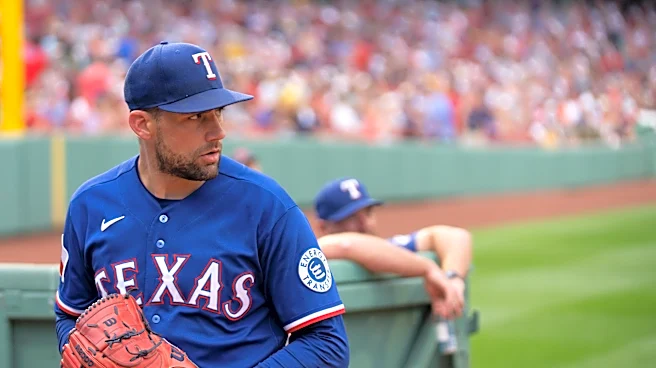
The Texas Rangers are reportedly exploring creative trade scenarios for pitcher Nathan Eovaldi, aiming to shed salary while acquiring valuable players. Rangers president of baseball operations, Chris Young, has indicated that the organization is open
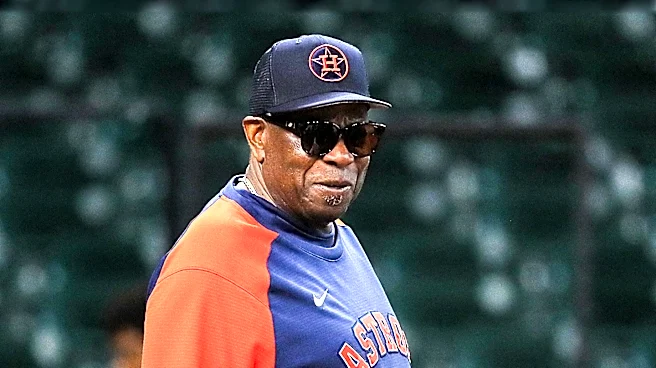
to trading Eovaldi, along with Jacob deGrom and Corey Seager, who collectively account for a significant portion of the team's $189 million payroll. Eovaldi possesses a full no-trade clause, meaning he must approve any potential deal. Two potential trade partners identified are the Boston Red Sox and the Houston Astros. A trade with the Red Sox could involve outfielder Jarren Duran, who has struggled recently but offers athleticism and defensive versatility. A deal with the Astros, Eovaldi's hometown team, might involve third baseman Isaac Paredes, addressing a potential logjam in Houston's infield and providing the Rangers with a designated hitter option.
Why It's Important?
These potential trades are critical for the Texas Rangers as they seek to retool their roster and manage their substantial payroll. By trading high-salaried veterans like Eovaldi, the team aims to free up financial flexibility to pursue other talent and address areas of need, such as the outfield following Evan Carter's hip surgery. The focus on acquiring players like Jarren Duran or Isaac Paredes, who are younger and potentially more cost-effective, aligns with Chris Young's stated desire for a more durable, athletic, and dynamic team. Such moves could signal a shift in the Rangers' long-term strategy, prioritizing sustainable roster building over high-priced, short-term solutions. The success of these trades will significantly impact the team's competitiveness and financial health in the coming seasons.
What's Next?
The offseason will be a period of intense negotiation and strategic decision-making for the Texas Rangers. Chris Young and his front office will need to identify teams willing to take on Eovaldi's contract and offer suitable returns. Eovaldi's no-trade clause adds a layer of complexity, as he must be amenable to the destination. The proposed trades with the Red Sox and Astros offer potential pathways, with the Red Sox needing pitching and the Astros having an infield surplus. The Rangers will also need to consider the impact of Evan Carter's injury on their outfield needs. The outcome of these trade discussions will shape the Rangers' roster for the 2027 season and beyond, influencing their ability to compete in the American League.
Beyond the Headlines
The Rangers' exploration of trades for Nathan Eovaldi highlights the intricate balance between team performance, financial management, and player agency in professional sports. Eovaldi's no-trade clause empowers him to influence his future, a common feature in high-value player contracts. The proposed trades also reflect the strategic thinking involved in 'salary dump' scenarios, where teams aim to offload expensive contracts while still acquiring valuable assets. This approach often involves targeting players who may be underperforming but possess high potential, or those who are surplus to another team's requirements. The ethical considerations of trading a player to his hometown team, as suggested with the Astros, also add a human element to these business decisions, balancing personal preferences with organizational goals.