



What's Happening?
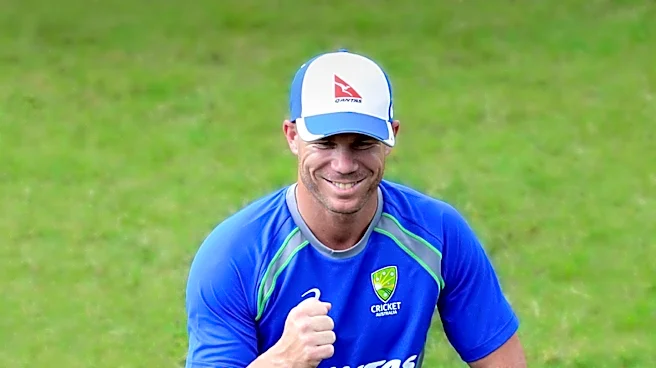
Former Australian Test cricketer David Warner has been convicted and fined $1,500 for mid-range drink-driving. The incident occurred on Easter Sunday when Warner, 39, attempted to switch seats with a passenger upon approaching a random breath-testing
site in Maroubra, Sydney. He subsequently tested more than twice the legal limit. His barrister, Awais Ahmad, argued in Waverley Local Court that Warner had already suffered significant punishment due to extensive global media coverage, which included outlets like ESPN, Al Jazeera, and the Indian Express. Ahmad contended that this 'media onslaught' has jeopardized Warner's valuable overseas commercial opportunities, particularly in countries with a 'non-drinking culture' such as India and Bangladesh, where he might seek to play in T20 franchise leagues. The judge, Clare Farnan, acknowledged the cruel social media commentary directed at Warner and his wife but emphasized the paramount need to deter drink-driving.
Why It's Important?
This incident highlights the significant impact of public perception and media scrutiny on the careers of high-profile athletes, even for offenses that might be considered 'unremarkable' for an average citizen. For athletes like Warner, whose careers often extend beyond their home country through international leagues and endorsements, a conviction, especially one involving alcohol, can have far-reaching financial and professional consequences. The argument presented by Warner's barrister underscores the commercial sensitivity of athletes' images, particularly in markets with differing cultural norms regarding alcohol consumption. The case also brings into focus the role of law enforcement in issuing press releases for such incidents and the subsequent amplification by global media, which can create a unique form of 'extra punishment' for public figures. This situation could influence how sports organizations and individual athletes manage their public image and conduct, recognizing the global reach of news and its potential to affect international career prospects and sponsorship deals.
What's Next?
David Warner will be required to apply for an interlock license and have a device fitted to his car, which will prevent it from starting if alcohol is detected in his system. His position as captain of the Sydney Thunder in Australia's domestic Big Bash League is also reportedly under threat, as the team is part of a state government campaign against drink-driving. The ongoing media attention and the court's decision could influence future contract negotiations and endorsement opportunities for Warner, particularly in international cricket leagues. The case may also prompt discussions within sports organizations about how to support athletes facing public scrutiny while upholding anti-drink-driving campaigns. The judge's emphasis on public deterrence suggests that despite the personal consequences for Warner, the legal system prioritizes broader societal safety messages.
Beyond the Headlines
The case of David Warner extends beyond a simple traffic offense, touching upon the complex interplay between celebrity status, legal consequences, and global cultural perceptions. The barrister's argument about the 'media onslaught' and its impact on 'commercial opportunities' in countries with a 'non-drinking culture' reveals the intricate web of ethical and cultural considerations that modern athletes must navigate. It highlights how an incident in one jurisdiction can have disproportionate effects due to differing societal values and the instantaneous global dissemination of information. This situation could lead to a re-evaluation of how public figures are treated in the media following minor offenses, and whether the 'punishment' meted out by public opinion and commercial loss outweighs or supplements legal penalties. It also underscores the increasing pressure on athletes to maintain an impeccable public image, not just locally, but on a global scale, to secure and retain lucrative international contracts and endorsements.