


What's Happening?
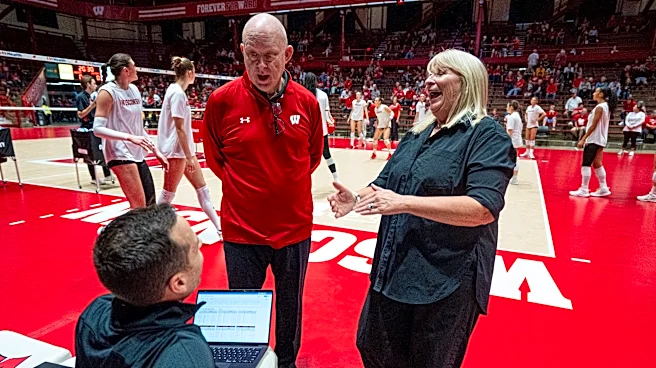
The Big Ten Conference has announced the launch of its inaugural volleyball tournament, marking a significant change in the league's structure. The tournament will feature a 17-match, round-robin conference schedule, with the top 15 teams qualifying for
the event, which will be held in Fishers, Indiana, from November 20-25. The top four seeds will receive a double bye to the quarterfinals, while the next four seeds will get a single bye. The bottom six teams will compete in the opening round. The tournament aims to prepare teams for the NCAA Tournament, which begins on December 3. Coaches from various teams, including Nebraska, Michigan State, and Northwestern, have expressed excitement about the new format, highlighting its potential to showcase the league's quality and increase national exposure.
Why It's Important?
The introduction of the Big Ten volleyball tournament is a strategic move to enhance the competitiveness and visibility of the conference. By creating a platform where all 15 teams can compete in a single event, the Big Ten aims to elevate the profile of college volleyball and attract more national attention. This change is expected to benefit teams by providing additional competitive opportunities and preparing them for the NCAA Tournament. The tournament also offers a new goal for teams that may not qualify for the NCAA Tournament, keeping them engaged throughout the season. The shift to a single round-robin schedule is designed to ensure a balanced and equitable competition, potentially leading to more accurate seeding and fairer outcomes.
What's Next?
The Big Ten volleyball tournament is set to take place from November 20-25, with the NCAA Tournament following shortly after. Teams will need to adjust their non-conference schedules to accommodate the new format, ensuring they remain competitive and maintain their rankings. Coaches will be closely monitoring the impact of the tournament on player fatigue and team performance, as the condensed schedule could pose challenges. The success of this inaugural tournament could influence other conferences to adopt similar formats, potentially reshaping the landscape of college volleyball. Stakeholders will be watching closely to assess the tournament's impact on attendance, viewership, and overall interest in the sport.