





What's Happening?
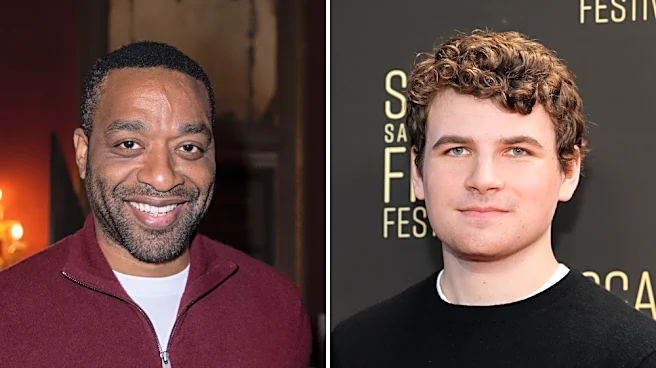
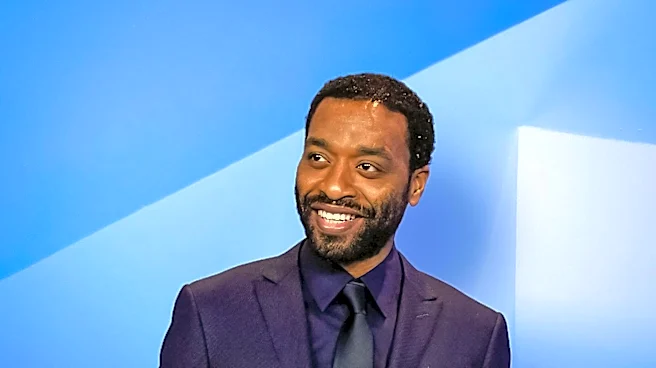
Actor Chiwetel Ejiofor recently spoke about his initial reservations and subsequent admiration for director Kane Parsons during the production of the hit horror film 'Backrooms.' Ejiofor, who plays a furniture store owner discovering a mysterious portal
in the film, was initially skeptical due to Parsons' young age of 19. However, after viewing Parsons' web series, Ejiofor was impressed by his talent. The film, produced for $10 million, has grossed over $400 million globally, making it one of the year's most profitable movies. Ejiofor highlighted a new generation of filmmakers who leverage online platforms for audience feedback, allowing them to refine their work in ways not previously possible. He also expressed his preference for characters that undergo significant change and growth, a theme he finds compelling across various genres.
Why It's Important?
The success of 'Backrooms' and the insights from Chiwetel Ejiofor underscore a significant shift in the U.S. film industry, particularly regarding the emergence of young, digitally native filmmakers. This trend demonstrates how online platforms and direct audience engagement are democratizing filmmaking, allowing new voices like Kane Parsons to achieve mainstream success without traditional industry gatekeepers. This could lead to a more diverse range of storytelling and a challenge to established production models. For actors, it highlights a growing appreciation for character evolution and depth, suggesting that compelling narratives remain a key driver for talent attraction. The financial success of 'Backrooms' also indicates a strong market for innovative horror and genre films, potentially encouraging more investment in such projects and offering new opportunities for independent studios.
What's Next?
The continued success of films like 'Backrooms' is likely to inspire more young creators to pursue filmmaking through digital avenues, potentially leading to a further decentralization of film production. Industry executives and studios may increasingly look to online platforms and viral content creators for new talent and project ideas, shifting traditional scouting and development processes. This could also lead to more experimental and genre-bending films entering the mainstream, as filmmakers with direct audience feedback are better equipped to gauge market interest. Actors may also prioritize roles that offer complex character arcs and opportunities for growth, influencing the types of scripts that gain traction in Hollywood.
Beyond the Headlines
This development points to a broader cultural shift where digital literacy and online community engagement are becoming powerful tools for artistic expression and commercial success. The ability of young filmmakers to 'pressure-test' their ideas with millions of online viewers before committing to large-scale productions represents a paradigm shift in creative development. This model challenges the traditional hierarchical structure of Hollywood, where established studios and producers held primary control over content creation. It also raises questions about intellectual property and ownership in a landscape where ideas can rapidly evolve and gain traction online, potentially blurring the lines between fan-made content and professional productions. The emphasis on character evolution also reflects a deeper audience desire for meaningful narratives that resonate beyond superficial entertainment.