
What's Happening?
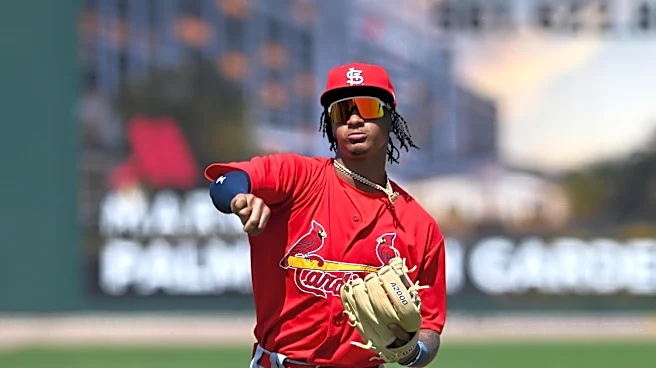
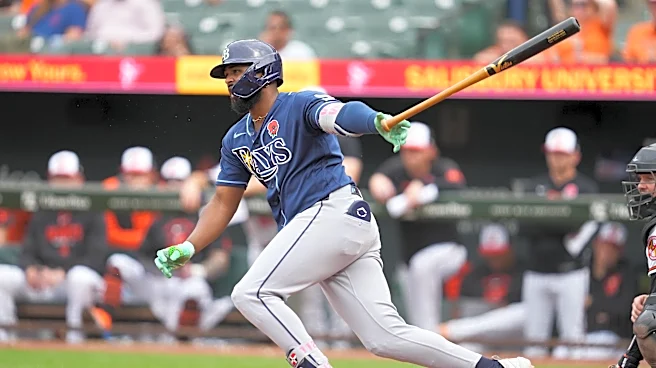
St. Louis Cardinals outfielder Jordan Walker has been selected to the All-MLB Second Team, an honor established by Major League Baseball in 2019 to recognize top-performing players during the regular season.
This award differs from the All-Star Game, which focuses solely on first-half performance, by considering a player's entire season output. Walker's selection was announced this past week, placing him among three outfielders on the Second Team. Earlier in the season, Walker was also one of three Cardinals players chosen for the 2026 All-Star Game and notably became the first Cardinal to win the Home Run Derby. Despite a decline in his second-half performance, Walker concluded the season with a batting line of .269/.327/.466/.793, hitting 29 home runs and driving in 102 runs. His OPS+ stood at 124, significantly above the league average of 100. Additionally, Walker demonstrated an average bat speed of 79.3 mph, ranking second in the majors, and showcased his athleticism with 22 stolen bases and an average sprint speed of 29.1 feet per second. His defensive capabilities are also notable, with an average arm strength of 96.5 mph, placing him in the 99th percentile in Major League Baseball.
Why It's Important?
Jordan Walker's recognition on the All-MLB Second Team underscores his emergence as a significant talent in Major League Baseball, particularly for the St. Louis Cardinals. This honor highlights his consistent performance over the entire season, providing a more comprehensive evaluation than mid-season accolades. For the Cardinals, Walker's achievement is a positive indicator of their player development and future competitiveness, especially as the team navigates the offseason with upcoming deadlines for Rule 5 roster protection and contract tenders. His strong offensive and defensive metrics, including high bat speed, stolen bases, and elite arm strength, position him as a cornerstone player. This recognition can boost team morale and fan engagement, signaling a promising future for the franchise. Furthermore, individual player awards like the All-MLB Team can influence player market value and team strategies in free agency and trade discussions, as teams seek to build around proven talent. Walker's success also provides a benchmark for other young players within the Cardinals' system, demonstrating the potential for high-level achievement.
What's Next?
The St. Louis Cardinals are facing several critical deadlines in the coming weeks that will shape their roster for the next season. Tuesday marks the deadline for Rule 5 roster protection, where teams must add players to their 40-man roster to shield them from the Rule 5 draft. While the Cardinals have not indicated which players, if any, will be added, media speculation suggests infielder Jesús Báez and pitcher Jacob Odle are potential candidates. The team currently has one opening on its 40-man roster but can create more if needed. Additionally, November 17 is the deadline for players to accept or reject Qualifying Offers, though the Cardinals did not extend any this year. On the same date, the Silver Slugger Awards will be announced, with Alec Burleson and Jordan Walker being finalists. The tender deadline is November 20, by which teams must offer 2027 contracts to all pre-arbitration and arbitration-eligible players. Any player not tendered a contract will be released. The Cardinals have nine arbitration-eligible players, including Nolan Gorman and Pedro Pagés, who are considered non-tender candidates. These upcoming decisions will significantly impact the team's composition and financial commitments for the next season.
Beyond the Headlines
Jordan Walker's selection to the All-MLB Second Team, despite a second-half performance dip, highlights a broader trend in baseball analytics and player evaluation. The All-MLB Team's focus on full-season output, as opposed to the All-Star Game's first-half bias, reflects a more data-driven approach to recognizing player value. This shift emphasizes consistency and overall contribution, which can be crucial for long-term player development and team strategy. Walker's case also brings to light the challenges young players face in maintaining peak performance throughout a demanding MLB season, underscoring the importance of physical conditioning and mental resilience. His elite arm strength and bat speed, as measured by advanced metrics, exemplify how modern baseball increasingly relies on granular data to identify and cultivate talent. This analytical approach not only informs award selections but also influences coaching methodologies, training regimens, and scouting decisions across the league. The recognition of players like Walker through such comprehensive awards helps to validate the investment in advanced analytics and their role in shaping the future of the sport.