


What's Happening?
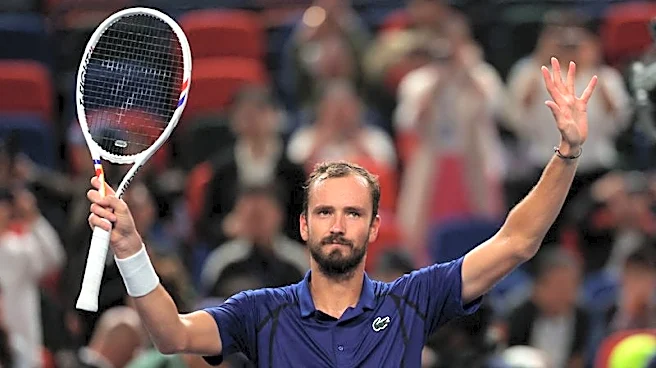
Alexander Zverev has officially clinched the 2026 ATP Year-End World No. 1 ranking, marking a career first. This achievement was mathematically secured on October 12, following Carlos Alcaraz's unexpected defeat at the Shanghai Masters. Zverev is set
to formally surpass Jannik Sinner for the top spot on November 2. This makes him the first German man in tennis history to conclude a season as the world's top-ranked player. In a recent press conference ahead of the Vienna Open, where he began his campaign with a victory over Martin Landaluce, Zverev addressed past criticisms, particularly from German tennis legend Boris Becker. Zverev stated that he no longer pays much attention to Becker's opinions, noting that historically, the opposite of Becker's predictions tends to occur. This comment came despite Becker recently congratulating Zverev on his achievement, praising his hard work and consistency.
Why It's Important?
Zverev's ascent to the ATP Year-End World No. 1 ranking signifies a significant shift in the landscape of men's professional tennis. His consistent performance throughout the year, culminating in this top ranking, highlights his growing dominance and potential to shape future tournaments. For German tennis, this is a historic milestone, ending a long drought for a male player at the pinnacle of the sport. The public exchange between Zverev and Boris Becker, a prominent figure and former world No. 1 himself, underscores the intense scrutiny and pressure top athletes face. Zverev's dismissal of Becker's past criticisms, even as Becker offers praise, reflects a broader narrative of athletes managing public perception and focusing on their own performance. This dynamic can influence how younger players interact with former legends and media commentary, potentially fostering a more independent approach to their careers.
What's Next?
With the year-end No. 1 ranking secured, Zverev will officially take over the top spot on November 2. His immediate focus will be on continuing his performance in ongoing tournaments, such as the Vienna Open, and preparing for the ATP Finals, where he will compete as the top-ranked player. His new status will undoubtedly place a larger target on his back, increasing expectations and pressure from competitors and fans alike. The tennis world will be watching to see if he can maintain this level of play and consistency into the next season. His comments regarding Boris Becker may also spark further discussion within the tennis community about the role of former players as commentators and the impact of their opinions on current athletes. Future interactions between Zverev and Becker, or other prominent figures, will be observed for any lingering tensions or shifts in their public dynamic.
Beyond the Headlines
Zverev's achievement transcends mere statistics, representing a triumph of perseverance and mental fortitude in a highly competitive sport. His journey to the top, marked by both successes and public scrutiny, including personal challenges, highlights the immense psychological demands placed on elite athletes. The subtle jab at Boris Becker, despite Becker's recent commendation, reveals a deeper narrative about the athlete's relationship with media and past critics. It suggests a conscious effort by Zverev to control his narrative and perhaps distance himself from external pressures that he perceives as unhelpful. This could set a precedent for how athletes in the public eye choose to engage with or disengage from commentary, prioritizing their mental well-being and focus. This shift could influence how sports media covers athletes, potentially leading to more nuanced reporting that considers the athlete's perspective on criticism and praise.