






What's Happening?
RNAV8 Bio, a biotechnology company specializing in AI-driven design for mRNA medicines, has been awarded funding from the Advanced Research Projects Agency for Health (ARPA-H) for its PROPEL (Programmable RNA for Optimal Precision in Therapeutic Efficacy
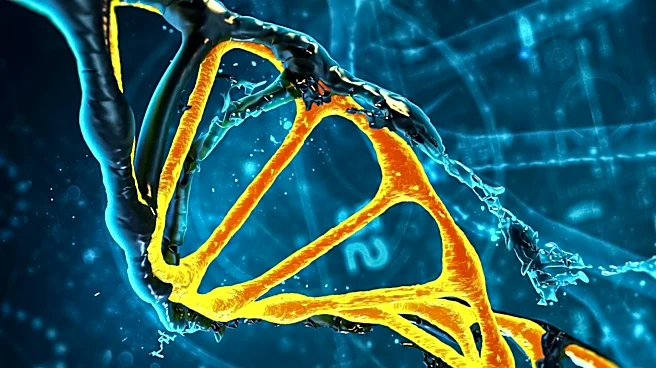
and Localization) program. This one-year pilot award, valued at up to $4.4 million, positions RNAV8 Bio as part of a team led by the Rouskin Lab at Harvard Medical School, with additional collaboration from the Weissman Lab at MIT/the Whitehead Institute. The PROPEL program aims to leverage RNA's natural folding behavior to create a precise, drug-tunable control layer for a new generation of RNA medicines. RNAV8 Bio's specific contribution within PROPEL will focus on the therapeutic format, screening protein output from transfected mRNA pools, engineering Untranslated Regions (UTRs) in the delivery format, and validating results at the cargo level to drive cell-type-selective expression of therapeutic payloads like gene-editing enzymes or CAR constructs.
Why It's Important?
This initiative represents a significant step forward in the field of RNA therapeutics, addressing a key challenge in mRNA medicine: the unpredictable relationship between an RNA's sequence and its actual function. By focusing on RNA's folding behavior and UTRs, PROPEL seeks to enable more precise control over where and when therapeutic proteins are expressed, moving beyond the current limitations of medicines that act wherever they are carried or genetic therapies that permanently alter DNA. This could lead to a new class of highly targeted and tunable RNA medicines, potentially reducing off-target effects and improving therapeutic efficacy. The ability to 'dial' protein expression without altering the genome offers a novel approach to treating a wide range of diseases. The collaboration between RNAV8 Bio, Harvard Medical School, and MIT underscores a concerted effort to translate fundamental biological insights into practical, programmable therapeutic solutions, with the potential to revolutionize drug development and patient care.
What's Next?
The PROPEL program will proceed with two main lines of work: discovery and engineering, both utilizing a single screening pipeline. The discovery phase will search human RNA for naturally occurring elements whose structure responds to metabolites or FDA-approved drugs, aiming to identify native regulatory mechanisms. The engineering phase will focus on installing regulatory elements into therapeutic mRNA to achieve cell-type selectivity and tunability through structural changes. By the end of its initial phase, the collaboration aims to produce a comprehensive map of how thousands of human RNA sequences respond to small molecules, a catalog of human UTR elements that dictate expression across cell types, and engineered UTRs demonstrating meaningful selectivity in therapeutic formats. These resources are intended to form a generalizable, disease-agnostic foundation for future RNA medicines. The success of this pilot could pave the way for further funding and broader application of these programmable RNA technologies in clinical settings.
Beyond the Headlines
The PROPEL initiative delves into the intricate world of RNA biology, moving beyond simply reading RNA sequences as instructions for protein synthesis. It explores the 'second layer' of information encoded in RNA's folding patterns and how these structures can be manipulated to control gene expression. This represents a paradigm shift in understanding and utilizing RNA, akin to unlocking a hidden language within the cell. The concept of 'logic-gated constructs' that express where and when they should, without permanent genomic alteration, raises profound implications for personalized medicine and the treatment of complex diseases. Furthermore, the integration of AI-driven design with laboratory validation highlights the growing synergy between artificial intelligence and biotechnology, accelerating the discovery and optimization of novel therapeutic agents. This approach could also inform our understanding of natural biological regulation, revealing previously uncharted mechanisms of control within human cells and potentially inspiring new avenues for synthetic biology.