


What's Happening?
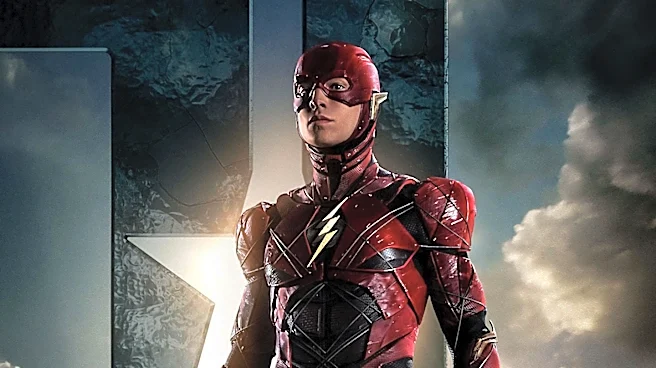
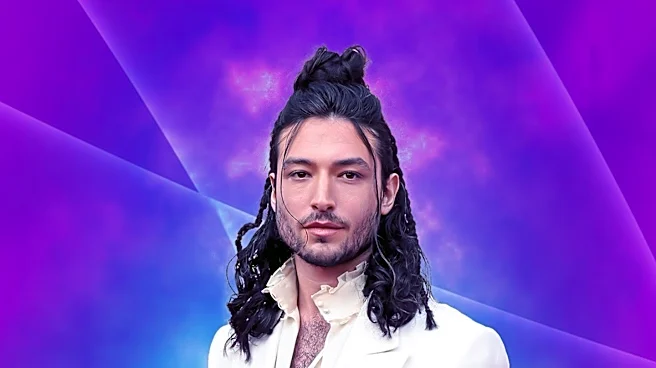
Grant Gustin, who portrayed The Flash for nine seasons on The CW, did not reprise his role in Zack Snyder's DC Extended Universe films, where Ezra Miller was cast as the cinematic Flash. This decision, made by director Zack Snyder, aimed to maintain a distinct
tonal separation between the darker, moodier DCEU and The CW's brighter 'Arrowverse.' Snyder explicitly stated that the tone of Gustin's Flash did not align with the universe he was developing for the big screen. Despite fan speculation and desire for Gustin to appear alongside characters like Ben Affleck's Batman and Gal Gadot's Wonder Woman, Gustin expressed contentment with his role on television. He cited his satisfaction with working alongside Geoff Johns and Greg Berlanti, whom he believed understood and cared for the character of The Flash. Gustin's tenure as The Flash concluded in early 2023, coinciding with the release of Ezra Miller's solo 'Flash' film, which faced a less favorable reception.
Why It's Important?
The decision to keep Grant Gustin's Flash separate from the DCEU highlights a significant strategy in franchise filmmaking: maintaining distinct narrative and tonal universes. This approach, while potentially disappointing to fans who desired a unified live-action DC multiverse, allowed both The CW's 'Arrowverse' and the DCEU to develop their own unique identities without being constrained by each other's established narratives or character interpretations. For Warner Bros. and DC, this meant managing two different versions of a popular character simultaneously, catering to different audience segments. The eventual box office performance of Ezra Miller's 'The Flash' film, contrasted with Gustin's long-running successful television series, could influence future decisions regarding shared cinematic universes versus standalone adaptations. It also underscores the challenges of adapting comic book properties across different media platforms and the varying expectations of audiences for each.
What's Next?
With Grant Gustin's run as The Flash on The CW concluded and Ezra Miller's solo film having been released, the immediate future for the character in live-action remains open to new interpretations. The DC cinematic universe is undergoing significant restructuring under new leadership, which could lead to a complete reboot or recasting of key roles, including The Flash. Future adaptations might explore new actors for the role, or potentially even revisit the concept of a multiverse that could theoretically bring different iterations of the character together, though no concrete plans have been announced. The reception of past projects will likely inform these decisions, with an emphasis on creating a cohesive and compelling vision for DC's cinematic future. The success of television series versus film adaptations will continue to be a point of analysis for studios planning their next steps in superhero franchises.
Beyond the Headlines
The divergence of The Flash character between television and film reflects a broader trend in media where intellectual properties are adapted across multiple platforms, often with different creative teams and visions. This can lead to a fragmented fan experience but also allows for diverse interpretations of beloved characters. The 'Arrowverse' on The CW, with its interconnected shows, demonstrated the viability of a long-form, serialized superhero narrative on television, building a dedicated fanbase over nearly a decade. Conversely, the DCEU aimed for a blockbuster cinematic experience, often with a darker tone. The differing outcomes for these two iterations of The Flash—a critically acclaimed, long-running TV series versus a financially underperforming film—could spark discussions within the industry about the optimal medium and approach for superhero storytelling. It also highlights the evolving relationship between television and film in the superhero genre, where TV is no longer just a stepping stone but a powerful storytelling platform in its own right.