



What's Happening?
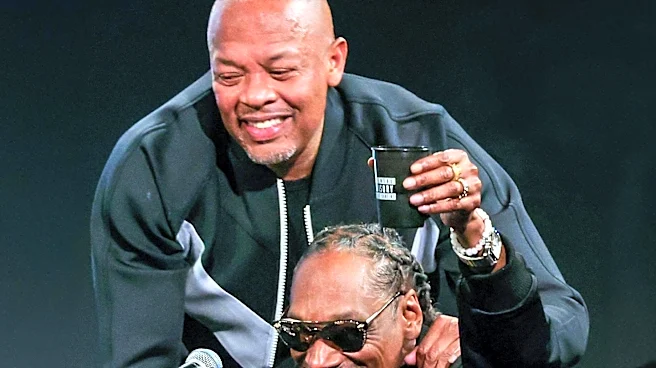
Dr. Dre, the renowned rapper and producer, has publicly stated his support for the use of artificial intelligence (AI) in music production. In an interview with The New York Times, alongside his long-time business partner Jimmy Iovine, Dre dismissed concerns
that AI poses a threat to the music industry. Instead, he views AI as a new creative tool, comparing its introduction to the earlier debates surrounding drum machines and synthesizers. He suggested that those who perceive AI as a threat might be individuals who struggle with creativity. Iovine echoed this sentiment, stating he sees no downside to AI in music creation and believes talented musicians using AI could produce better records. Both Dre and Iovine indicated that many producers are already privately experimenting with AI in their work. This stance comes amidst ongoing discussions within the music industry regarding AI's impact on creativity, copyright, and the livelihoods of artists.
Why It's Important?
Dr. Dre's endorsement of AI in music is significant because it comes from a highly influential figure in the industry, potentially shifting perceptions and accelerating the adoption of AI tools among artists and producers. His comparison of AI to past technological advancements like drum machines and synthesizers frames AI not as a disruptive force, but as a natural evolution in music production. This perspective could encourage more mainstream artists to explore AI, leading to new sounds and creative processes. However, it also intensifies the debate around intellectual property rights, fair compensation for human artists, and the definition of originality in an era where AI can generate music. The music industry, including streaming services, is grappling with how to categorize and compensate AI-generated content, and a prominent figure like Dr. Dre embracing it could force these issues to the forefront, impacting business models and legal frameworks.
What's Next?
The music industry is likely to see continued polarization regarding AI's role. While some artists and producers, inspired by figures like Dr. Dre, may increasingly integrate AI into their workflows, others will likely continue to voice concerns about its ethical implications and potential to devalue human artistry. Streaming services are already implementing measures to label AI-generated music, and these efforts will likely become more sophisticated. There may be increased pressure for clearer guidelines and regulations concerning AI's use in music, particularly regarding copyright and attribution. The debate could also spur innovation in AI tools designed to augment human creativity rather than replace it, leading to new collaborative models between artists and AI. Furthermore, the discussion around AI's impact on creative industries will likely broaden, influencing policy decisions and industry standards beyond music.
Beyond the Headlines
The embrace of AI by a figure like Dr. Dre highlights a deeper philosophical question about the nature of creativity and artistry in the digital age. His argument that AI is merely another tool, akin to synthesizers, challenges the notion that technology inherently diminishes artistic value. This perspective suggests that the true measure of art lies in the artist's vision and skill in utilizing available tools, rather than the tools themselves. However, it also raises concerns about the potential for AI to democratize music creation to such an extent that it floods the market with content, making it harder for human artists to stand out and earn a living. The ethical implications of AI replicating artists' voices and styles without permission also remain a critical, unresolved issue, pointing to a future where legal and ethical frameworks will need to evolve rapidly to keep pace with technological advancements in creative fields.