







What's Happening?
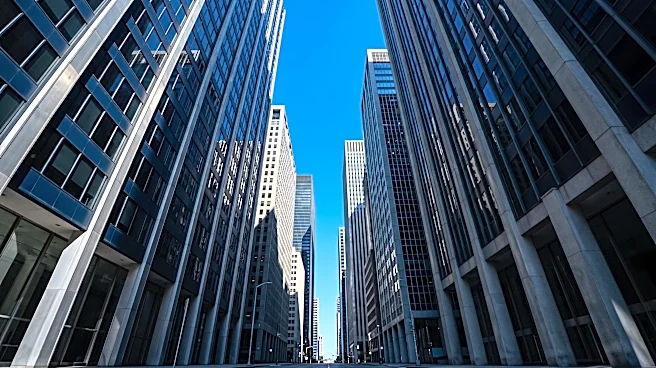
Manhattan's office market has seen a significant resurgence, with occupancy levels now exceeding those recorded before the COVID-19 pandemic. The 450 million square feet of office space in Manhattan are reportedly more full than they were prior to the pandemic,
defying earlier predictions of a 'doom loop' for New York City's commercial real estate. This boom in occupancy during the third quarter is attributed to a surge in new leases, renewals, and expansions across all Manhattan submarkets, including areas from the World Trade Center to 625 Madison Avenue. Major drivers of this demand include the finance, insurance, real estate, technology, and legal sectors. Notably, AI companies are emerging as significant market makers, with tech firms accounting for 20% of new leases. For instance, AI powerhouse Anthropic leased the entire 465,000 square-foot building at 330 Hudson Street. Law firms also continue to be major occupants, with Simpson Thacher & Barlett signing nearly 1 million square feet at 570 Fifth Avenue.
Why It's Important?
The robust recovery of Manhattan's office market signals a strong economic rebound for New York City and has significant implications for the U.S. commercial real estate sector. The increased demand, particularly for high-quality, amenity-rich buildings, is driving up rents at a rapid pace. According to CBRE, 'asks' for Manhattan office space rose nearly 4% year-over-year, while Colliers reported a rise in Midtown asking rents from $80.71 to $84.99 per square foot. For Class-A buildings, the increase was even more substantial, with asking rents jumping from $75.44 to $94.91 per square foot, a 9.9% increase, according to Savills. This trend benefits real estate investment trusts (REITs) and property owners like SL Green Realty, which owns properties such as 346 Madison Avenue, as their assets appreciate in value and generate higher rental income. The tight market for premium office space also indicates a strong job market in key sectors, as companies expand their physical footprints to accommodate growing workforces. This demand also highlights the continued importance of physical office spaces, even in an era of remote and hybrid work models, particularly for collaborative and innovative industries like AI and finance.
What's Next?
The current trend suggests that the demand for Manhattan office space is unlikely to abate soon, with no significant new inventory expected to become available for several years from planned projects like Vornado and Ken Griffin’s 350 Park Avenue, BXP’s 343 Madison Avenue, and SL Green’s 346 Madison Avenue. This limited supply, coupled with sustained high demand, is expected to continue driving rent increases, especially for premium spaces. The scarcity of available space in top-tier buildings is already making it challenging for tenants seeking to expand, with some commercial brokers noting near-zero availability for large leases. This could lead some companies to consider alternative locations, potentially outside Manhattan, for support staff, though the primary focus remains on securing space within the city. The ongoing expansion of tech and AI companies will likely continue to shape the market, with these sectors remaining key drivers of new leases and office space utilization. The market will also be watching for the full market survey from CBRE, expected next week, to provide further insights into the third-quarter performance.
Beyond the Headlines
The resurgence of Manhattan's office market challenges the narrative of a permanent shift away from traditional office work post-pandemic. It underscores the enduring value of physical workspaces for certain industries, particularly those that thrive on collaboration, innovation, and in-person client interactions, such as finance, law, and rapidly growing tech sectors like AI. The intense competition for prime office space also highlights a growing disparity in the commercial real estate market, where high-quality, amenity-rich buildings are in high demand, while lower-quality spaces may struggle to attract tenants. This could lead to a 'flight to quality' phenomenon, where companies prioritize modern, well-equipped offices to attract and retain talent. Furthermore, the significant investment by AI companies in physical office space suggests a long-term commitment to in-person operations, potentially influencing urban planning and infrastructure development in key business districts. The tight market also raises questions about affordability and accessibility for smaller businesses or startups looking to establish a presence in Manhattan, potentially concentrating economic power among larger, more established firms.