









What's Happening?
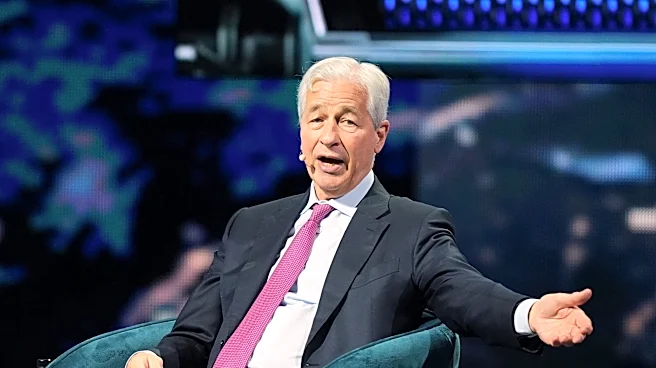
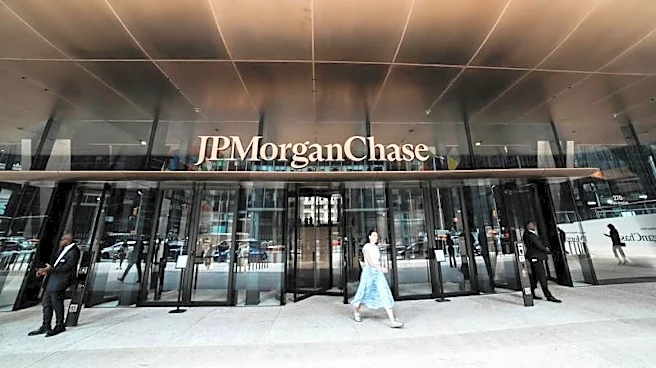
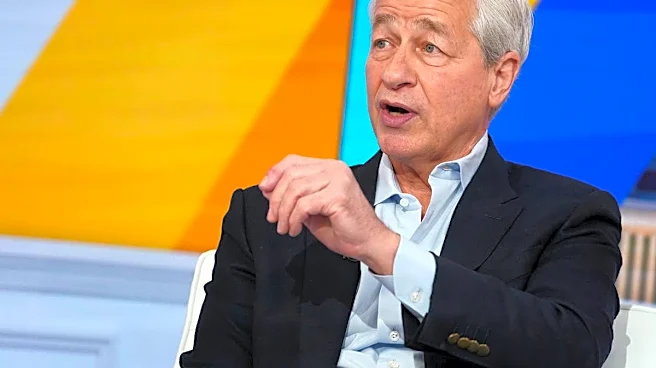
JPMorgan has announced the elevation of Troy Rohrbaugh and Doug Petno to co-presidents, positioning them as leading candidates to succeed CEO Jamie Dimon. This move narrows the field of potential successors, following years of speculation and a rotating
cast of candidates. Petno, known for his client relationships and leadership in commercial banking, will now lead the commercial and investment bank alone. Rohrbaugh, recognized for his risk management skills, will become CEO of the consumer and community banking unit. Marianne Lake, previously a frontrunner in the succession race, is retiring. Despite these changes, Dimon, 70, is not expected to step down soon, with analysts suggesting he may remain in his role for several more years. This timeline could influence whether Petno, 61, or Rohrbaugh, 56, ultimately succeeds him.
Why It's Important?
The succession plan at JPMorgan is significant as it impacts the leadership of one of the largest financial institutions in the U.S. and globally. Jamie Dimon has been a prominent figure in the banking industry, and his eventual departure will mark a major transition. The choice between Petno and Rohrbaugh could influence the bank's strategic direction, particularly in areas like client relationships and risk management. The decision also reflects broader trends in corporate governance and succession planning within major financial institutions. Stakeholders, including investors and employees, are closely watching this process, as it will affect the bank's future operations and market position.
What's Next?
As co-presidents, Petno and Rohrbaugh will need to demonstrate their capabilities in their new roles to solidify their candidacy for CEO. Petno will focus on maintaining strong client relationships and managing the corporate and investment bank, while Rohrbaugh will gain experience in consumer banking. Their performance in these roles will be critical in determining who will eventually succeed Dimon. The timeline for Dimon's departure remains uncertain, but the bank's leadership transition will continue to be a focal point for analysts and stakeholders.