





What's Happening?
The Springer Tungsten Complex in Imlay, Nevada, has secured between $150 million and $175 million in funding from a joint investment by Blue Moon Metals, The Elmet Group (TEG), and EQ Resources. This investment aims to significantly strengthen the U.S.
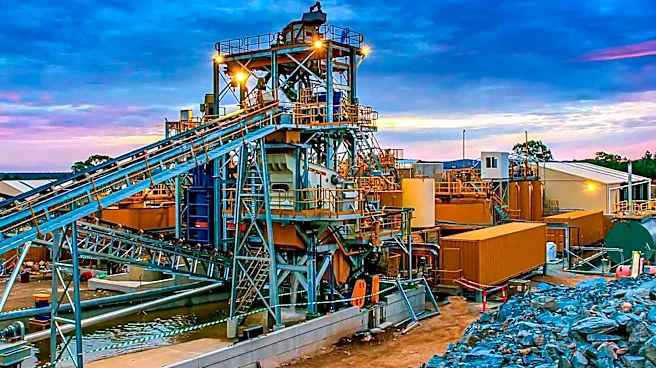
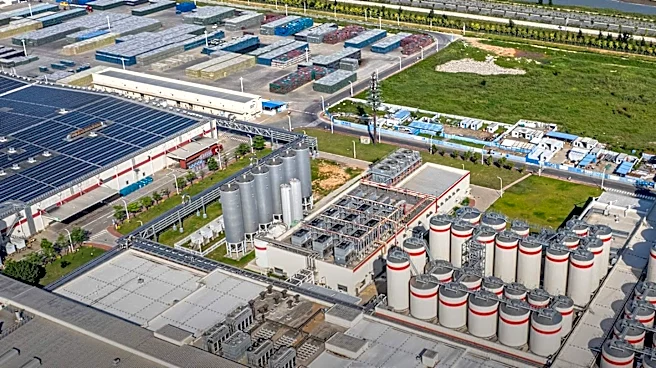
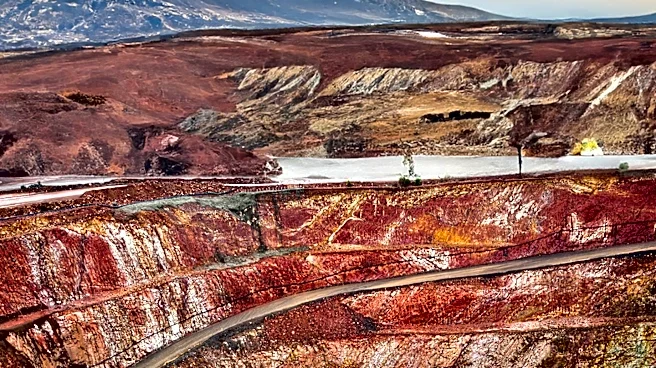
tungsten supply chain. The Springer complex includes open-pit and underground mines, a mill capable of processing 1,200 tonnes per day (tpd), and an ammonium paratungstate (APT) plant with a production capacity of up to 4,000 tonnes per annum (tpa). The investment framework involves the creation of a joint venture (JV) entity to own and operate the APT plant, while Blue Moon Metals will retain control over the mine and mill. TEG plans to invest $150 million, comprising a direct investment in Blue Moon’s activities at the Springer site and an equity injection into the JV. An additional $25 million in standby funding has been earmarked by TEG and EQ for the APT plant’s restart, if necessary. The investment also includes a $50 million tungsten prepayment facility from TEG to Blue Moon, to be repaid through sales credits from concentrate output.
Why It's Important?
This substantial funding for the Springer Tungsten Complex is critically important for the U.S. industrial and defense sectors, as tungsten is a strategic mineral essential for various high-tech applications, including aerospace, electronics, and military equipment. Strengthening the domestic tungsten supply chain reduces reliance on foreign sources, enhancing national security and economic resilience. The investment will reactivate a significant U.S. tungsten production facility, contributing to job creation in Nevada and stimulating local economies. By establishing a joint venture for the APT plant, the project ensures specialized expertise and capital are dedicated to processing raw tungsten into a usable form, further integrating the domestic supply chain. The commitment to restart the mine and plant by Q4 2027, with the APT plant following in H2 2028, signals a tangible step towards re-establishing U.S. leadership in critical mineral production. This initiative aligns with broader U.S. government efforts to secure domestic supplies of critical minerals and reduce vulnerabilities in global supply chains, which have been highlighted by recent geopolitical events and trade disruptions.
What's Next?
The completion of the proposed transactions is contingent upon regulatory approvals, due diligence, and the execution of final agreements. The parties anticipate finalizing a $50 million initial investment within 45 days, with half allocated to equity subscription and half to the first tranche of the prepayment facility. Following these steps, the mine and plant are expected to return to operation in the fourth quarter of 2027, with the APT plant projected to restart in the second half of 2028. The JV entity, with TEG holding 70% equity, Blue Moon 20%, and EQ 10%, will direct a $75 million capital injection into the APT plant, with TEG overseeing its operations. Blue Moon will provide the APT plant and related infrastructure, along with offtake agreements for tungsten concentrate, ensuring a steady supply. Specific feedstock allocation and supply agreements will prioritize the Springer site for up to 75% of the APT feed during the initial five years. The success of this project could pave the way for similar investments in other critical mineral facilities across the U.S.
Beyond the Headlines
The revitalization of the Springer Tungsten Complex carries deeper implications for U.S. industrial policy and environmental stewardship. Beyond economic benefits, securing a domestic tungsten supply chain addresses national security concerns by reducing dependence on potentially unstable foreign sources, particularly for defense applications. This move reflects a broader strategic shift in the U.S. towards re-shoring critical mineral production. Environmentally, the restart of mining operations will necessitate stringent adherence to modern environmental regulations, potentially setting new standards for sustainable mining practices in the region. The project's success could influence public perception of mining, demonstrating that resource extraction can be conducted responsibly with significant economic benefits. Culturally, the re-establishment of a major industrial operation in Nevada could impact local communities, bringing both employment opportunities and potential challenges related to infrastructure and social services. Legally, the complex joint venture structure and financing mechanisms could serve as a blueprint for future public-private partnerships in critical mineral development, navigating regulatory landscapes and ensuring long-term viability. This initiative underscores the intricate balance between economic imperatives, national security, and environmental responsibility in the pursuit of critical resources.