






What's Happening?
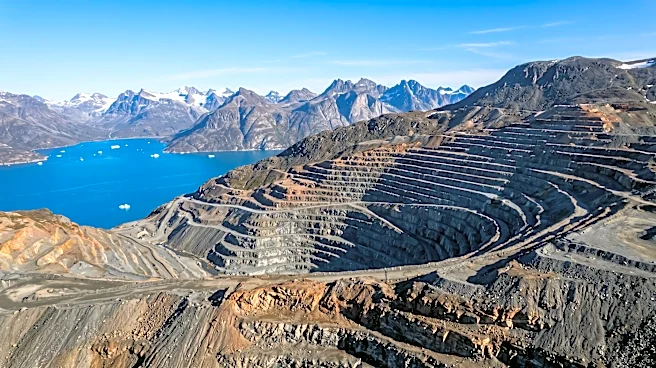
Greenland's authorities have approved the extraction and closure plans for Critical Metals Corp.'s Tanbreez rare earths project. This decision marks a significant step forward for the project, which is located in southern Greenland and is considered one
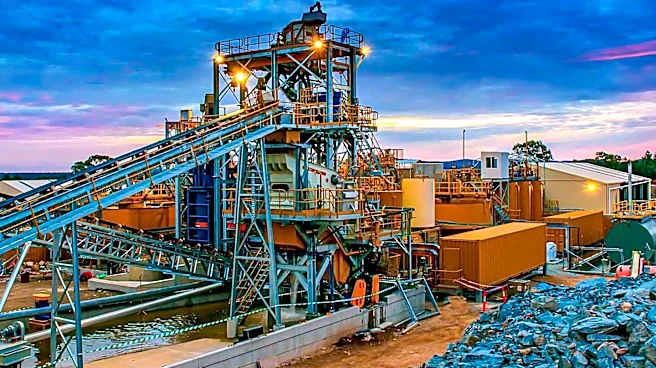
of the largest undeveloped heavy rare earth deposits outside of China. The approved plans detail the construction, operation, and eventual restoration of the mine, processing facilities, port, and related infrastructure through September 2050. While this approval removes a major hurdle, Critical Metals Corp. still needs to obtain additional activity-specific authorizations, including those for environmental management, marine transport, health and safety, and mineral exports, along with securing a mandatory financial security. The company aims for initial ore output in late 2028 or early 2029, with concentrate shipments projected to begin in the third quarter of 2029. A preliminary economic assessment from March 2025 estimated the project's after-tax net present value at $2.1 billion, with initial capital costs around $290 million.
Why It's Important?
This approval is crucial for the United States and its allies as they seek to diversify critical mineral supply chains away from China. Greenland's strategic importance in this effort was recently highlighted by a new security pact signed by the U.S., Denmark, and Greenland, which emphasizes collaboration on minerals and economic development. The Tanbreez project, once operational, could provide a significant non-Chinese source of heavy rare earths, which are essential for various high-tech industries, defense applications, and clean energy technologies. Critical Metals Corp. has already entered into a 15-year offtake agreement with REalloys for 15% of Tanbreez's initial output, with the intention of channeling this material into a U.S.-based mine-to-magnet supply chain. The U.S. Export-Import Bank has also shown interest, issuing a $120-million letter of interest for potential financing, underscoring the project's strategic value to U.S. interests in securing critical mineral resources.
What's Next?
Critical Metals Corp. must now secure several additional activity-specific authorizations, including permits for environmental management, marine transport, health and safety, and mineral exports. The company also needs to provide financial security and a corporate guarantee by the end of the current year, as stipulated by its exploitation license awarded in 2020. Once these permits are obtained and financial security is in place, construction of the mine can commence. The company is targeting first ore output in late 2028 or early 2029, with concentrate shipments expected to follow in the third quarter of 2029. Critical Metals Corp. is also moving towards full ownership of the Tanbreez project by acquiring European Lithium, which holds the remaining 7.5% interest, with a shareholder vote scheduled for October 22. The successful progression of these steps will determine the project's timeline and its contribution to global rare earth supplies.
Beyond the Headlines
The approval of the Tanbreez project in Greenland highlights the intensifying global competition for critical mineral resources and the strategic efforts by Western nations to reduce their reliance on China. This development could reshape geopolitical dynamics in the Arctic, as Greenland becomes a more significant player in the global supply chain of rare earth elements. The project also underscores the complex balance between economic development, environmental stewardship, and indigenous community interests in resource-rich regions. The long-term success of Tanbreez will depend not only on its operational efficiency but also on its ability to navigate these multifaceted challenges, setting a precedent for future mining ventures in sensitive geopolitical and ecological areas. The U.S. involvement, through potential financing and offtake agreements, signals a broader strategy to build resilient supply chains and foster economic partnerships in critical sectors.