






What's Happening?
A recent survey by online job bank 104 indicates that over 78% of employers in Taiwan plan to issue year-end bonuses this year, with the average bonus expected to be equivalent to 1.61 months of wages. This figure represents a slight decrease of 0.04
months from the previous year, though it has remained largely stable over the past three years. The survey, conducted from October 6 to November 2, found that 78.5% of polled employers intend to provide bonuses, an increase from approximately 68% in the prior year. Financial industry employers are projected to offer the largest bonuses, averaging 2.85 months' wages, followed by the semiconductor industry at 2.09 months, and the wholesale industry at 1.81 months. Senior adviser Lo Yueh-hua from 104 noted that record profits in financial holding companies and the AI boom benefiting the semiconductor sector are driving these more generous bonuses. The survey also revealed that 66.9% of employers raised wages in 2026 by an average of 4.7%, an increase from 2025 figures.
Why It's Important?
The findings reflect a mixed economic outlook in Taiwan, where companies are balancing employee retention strategies with growing caution about future economic conditions. While the high percentage of employers offering bonuses signals a commitment to their workforce, the slight dip in the average bonus amount and a projected slowdown in wage increases for 2027 suggest a more conservative approach. This caution is attributed to signs that Taiwan's economic growth may have peaked, coupled with global economic and political uncertainties and the evolving impact of AI development. The disparity in bonus sizes across industries highlights the uneven economic landscape, with the financial and semiconductor sectors thriving due to specific market conditions, while other sectors may face tighter margins. This trend could influence talent migration within Taiwan, as employees seek opportunities in industries offering more attractive compensation packages.
What's Next?
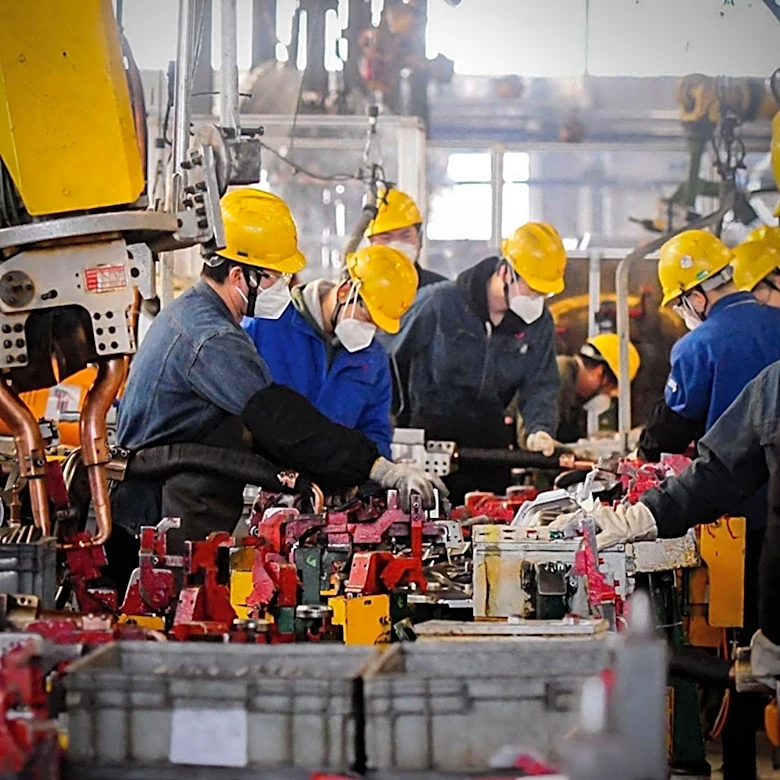
Looking ahead to 2027, only 50.5% of employers anticipate raising wages, a significant drop of 16.4 percentage points from 2026, with the average planned increase also lower at 4.2%. This indicates a potential cooling in wage growth across Taiwan. Metal manufacturing employers are planning the largest average wage increases for 2027 at 4.9%, followed by the food and beverage industry at 4.6%, and the machinery industry at 4.5%. Even traditionally 'old economy' sectors like metal manufacturing are seeing profit boosts by integrating into the AI supply chain, providing precision components for AI servers and cooling systems. This strategic pivot suggests that companies adapting to new technological demands may continue to offer competitive compensation, while those less integrated might face challenges in attracting and retaining talent. The overall trend points to a more selective approach to wage adjustments, influenced by specific industry performance and global economic shifts.
Beyond the Headlines
The survey's insights extend beyond immediate compensation trends, revealing deeper shifts in Taiwan's industrial landscape. The strong performance of the semiconductor industry, fueled by the AI boom, underscores Taiwan's critical role in the global technology supply chain. The ability of traditional sectors like metal manufacturing to pivot and integrate into the AI supply chain highlights the adaptability and innovation within Taiwan's industrial base. This strategic evolution is crucial for maintaining economic resilience amidst global uncertainties. However, the overall cautious outlook for 2027 wage increases suggests that businesses are closely monitoring geopolitical developments and global economic headwinds, which could impact investment decisions and employment stability. The emphasis on year-end bonuses as a retention tool also points to a competitive labor market where companies are actively working to secure skilled talent, particularly in high-growth sectors.