







What's Happening?
In recent years, quick service restaurants (QSRs) like McDonald's, Taco Bell, KFC, and Chick-fil-A have been making significant investments in their beverage offerings. These brands are moving beyond traditional limited-time offers (LTOs) and are instead
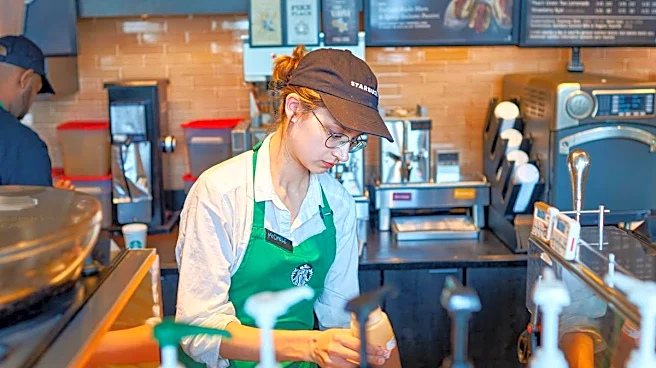
focusing on creating permanent beverage business models. McDonald's, for instance, spent 18 months testing a standalone concept called CosMc's to refine its beverage strategy before integrating it into its existing system. Taco Bell has introduced dedicated drink counters in its Cantina locations, while KFC is expanding its Kwench beverage bars globally. Chick-fil-A has also experimented with a drinks-first concept in Georgia. These efforts reflect a shift in strategy, as QSRs aim to capture a larger share of the beverage market, traditionally dominated by pure-play operators like Starbucks and Dunkin'.
Why It's Important?
The strategic shift towards a dedicated beverage business model is crucial for QSRs as it opens new revenue streams and enhances profitability. Beverages offer higher profit margins compared to food items, and by investing in dedicated infrastructure, training, and marketing, QSRs can tap into new customer occasions such as afternoon snacks and late-night drinks. This move is particularly important as the beverage market continues to grow, driven by consumer demand for premium and specialty drinks. By establishing a strong presence in this category, QSRs can compete more effectively with established beverage brands and attract younger, more frequent customers. The success of these initiatives could lead to a significant reshaping of the QSR landscape, with those investing in beverages potentially gaining a competitive edge.
What's Next?
As QSRs continue to invest in their beverage offerings, the next few years will likely see a clearer division between brands that treat beverages as a core business model and those that view it as a marketing exercise. Brands that commit to building dedicated beverage infrastructure and training will likely see sustained growth in this category. Meanwhile, pure-play operators like Starbucks and Dunkin' are not expected to slow down, maintaining their dominance by continuing to innovate and cater to evolving consumer preferences. The decisions made by QSRs now will determine their position in the beverage market by 2030, with those making substantial investments poised to capture a significant share of the market.