





What's Happening?
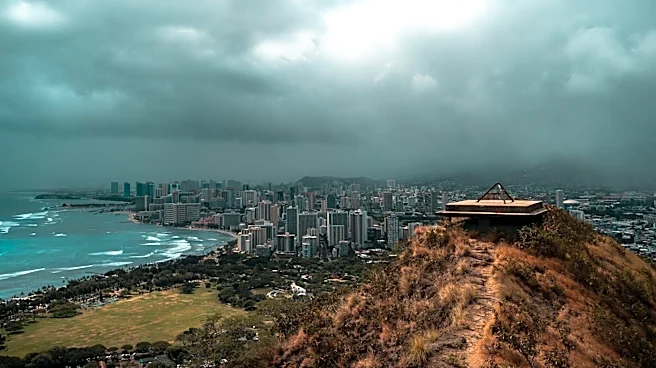
Hawaii's tourism sector is facing a notable challenge as visitor days in July fell by over 1 million, despite a slight increase in overall arrivals and spending. Preliminary data from the state Department of Business, Economic Development and Tourism
indicates that the average visitor stay dropped by 14.1% to 7.59 days, marking the shortest July stay since 2011. This reduction in trip length translated to approximately 32,000 fewer visitors present in Hawaii on any given day during the month. While arrivals rose by 1.1% to 883,248 visitors and spending increased by 1.7% to $1.99 billion, the shortened stays are a significant concern for industry officials. Jerry Gibson, president of the Hawai‘i Hotel Alliance, highlighted that the loss of over 1 million visitor days in July, traditionally Hawaii's strongest tourism month, is a clear warning sign that cannot be ignored. The trend of shorter vacations is attributed to rising travel costs, inflation, and general economic uncertainty, prompting visitors to trim their itineraries rather than cancel trips entirely.
Why It's Important?
The decline in visitor days, despite increased arrivals, signals a shift in tourist behavior that has substantial implications for Hawaii's economy. While fewer visitor days might alleviate concerns about overtourism, it simultaneously limits the economic opportunities for a wide range of businesses, including hotels, restaurants, retailers, attractions, and transportation providers. Industry officials, such as Jerry Gibson, are increasingly viewing the length of stay as a more critical indicator of tourism health than arrival numbers alone. Shorter stays reduce the potential economic benefits across the entire tourism sector, impacting revenue generation and job stability. The increased costs for both visitors and local businesses, including higher labor, freight, food, fuel, and utility expenses, are being passed on to consumers, further influencing travel decisions. This trend could lead to a decrease in overall tourism revenue, even if the number of individual visitors remains stable or slightly increases, posing a challenge for the state's economic planning and recovery efforts.
What's Next?
The Hawaii tourism industry is closely monitoring the trend of shorter visitor stays, with concerns growing about its potential impact in the fall. If this pattern persists through September, October, and November, it could become a more significant issue for the state's economy. Industry leaders like Jerry Gibson emphasize the need for action to address this trend. Hotels have already begun running promotions and last-minute deals, which is unusual for Hawaii's peak summer season, indicating a proactive response to attract and retain visitors. Further discussions and strategies may be explored to encourage longer stays or to mitigate the financial impact of shorter ones. This could involve targeted marketing campaigns, adjustments to pricing structures, or collaborations between various tourism stakeholders to offer more compelling reasons for visitors to extend their trips. The state may also need to re-evaluate its tourism metrics and focus on strategies that prioritize visitor spending and length of stay over mere arrival numbers to ensure sustainable economic growth.
Beyond the Headlines
The shift towards shorter vacations in Hawaii reflects broader economic pressures and evolving consumer behaviors in the post-pandemic travel landscape. This trend highlights a delicate balance between managing overtourism and ensuring economic viability for destinations heavily reliant on tourism. While a reduction in visitor days might offer some environmental relief and ease strain on local infrastructure, it simultaneously creates financial challenges for businesses and residents. The situation underscores the need for a more nuanced approach to tourism management that considers both the ecological and economic impacts. It also raises questions about the long-term sustainability of current tourism models, prompting a re-evaluation of how destinations can attract high-value visitors who contribute more to the local economy over longer periods, rather than simply focusing on increasing visitor numbers. This could lead to innovations in tourism offerings, emphasizing unique experiences that justify extended stays and higher spending, thereby fostering a more resilient and responsible tourism ecosystem.