






What's Happening?
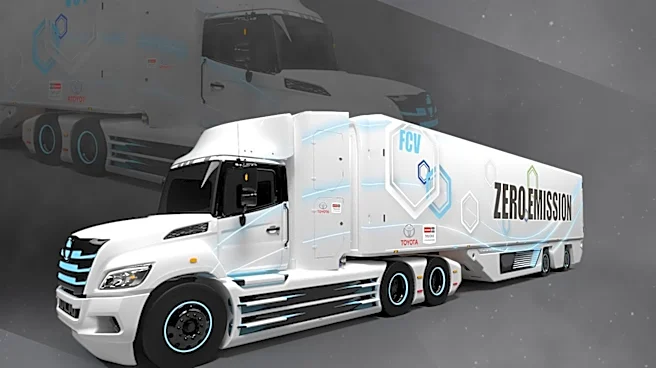
Toyota has entered into a binding agreement to acquire an equal one-third stake in cellcentric, a heavy-duty fuel cell joint venture originally established by Daimler Truck and Volvo Group in 2021. This agreement solidifies a previous non-binding arrangement
made in March 2026, with the transaction expected to be finalized by the end of 2026 or early 2027, pending regulatory approval. The joint venture aims to address the challenges of heavy-duty hydrogen technology, which currently lacks sufficient market demand and infrastructure. Cellcentric will operate independently, supplying a range of sectors including on-road trucks, coaches, marine, rail, stationary power generation, and heavy off-highway equipment. The collaboration is designed to share the financial burden of developing hydrogen technology, which none of the companies could support alone.
Why It's Important?
The partnership between Toyota, Daimler Truck, and Volvo Group in cellcentric represents a significant step in advancing hydrogen fuel cell technology, particularly for heavy-duty applications. This collaboration could accelerate the development of hydrogen infrastructure, which is crucial for the widespread adoption of fuel cell vehicles. By pooling resources, the companies aim to overcome the current limitations of hydrogen technology, such as the lack of refueling networks. This move could potentially lead to a more sustainable transportation sector, reducing reliance on fossil fuels and decreasing carbon emissions. The success of this venture could also influence other industries to invest in hydrogen technology, further expanding its market potential.
What's Next?
The completion of Toyota's stake acquisition in cellcentric is anticipated by the end of 2026 or early 2027, subject to regulatory approval. As the joint venture progresses, the partners are expected to collaborate with industry bodies to develop the necessary hydrogen refueling infrastructure. This will be crucial for creating demand for fuel cell vehicles. Additionally, the companies will continue to compete in other areas of their businesses, maintaining a focus on the specific scope of the joint venture. The success of this collaboration could lead to further partnerships and innovations in hydrogen technology, potentially influencing global energy and transportation policies.