



What's Happening?
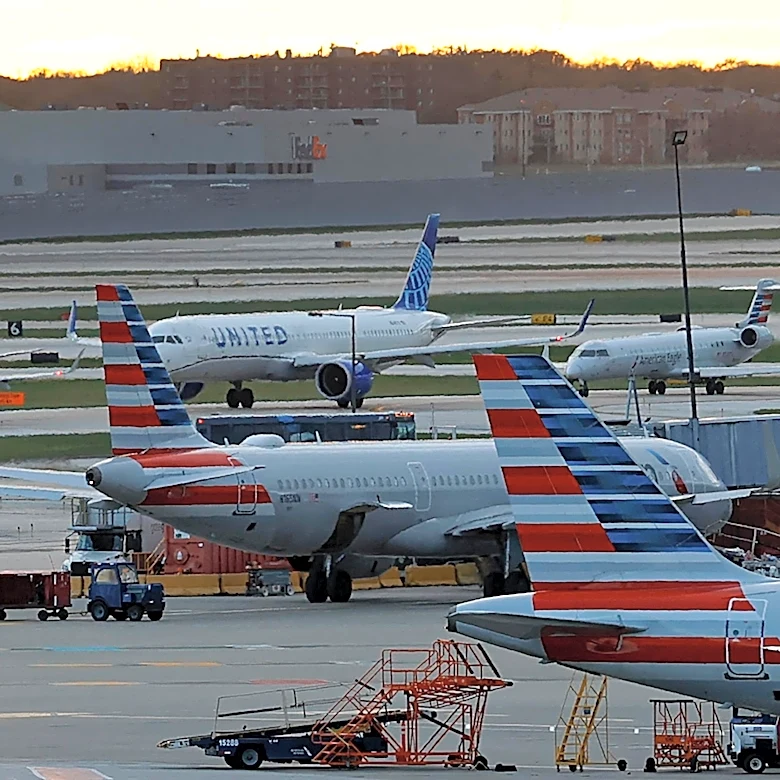
The Federal Aviation Administration (FAA) issued a nationwide ground stop for all flights in the United States on Friday afternoon due to "extraordinary circumstances and for reasons of safety." This directive significantly impacted numerous college football
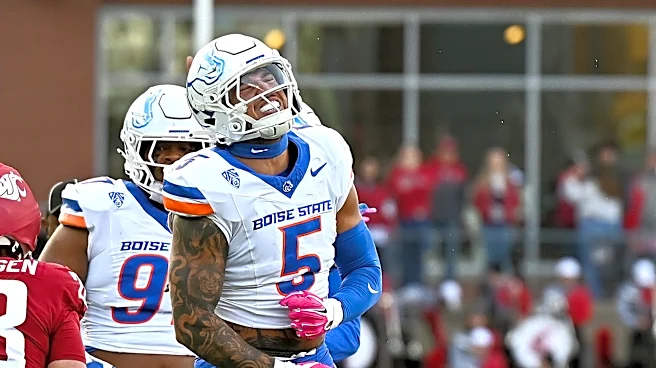
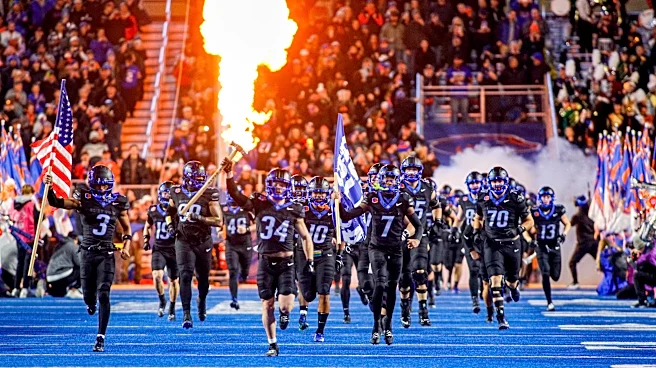
teams, including the Oregon State Beavers, who were scheduled to fly from Corvallis to Boise for a Saturday matchup against No. 24 Boise State. The Beavers, with a 5-4 record, were stuck in Corvallis as their planned 3:20 p.m. PT flight was grounded. ESPN's Pete Thamel reported that Oregon State was exploring all options, including attempting to fly later Friday night or arranging buses for Saturday morning as a contingency. Boise State athletic director Jeramiah Dickey acknowledged the situation, stating that the team and the Pac-12 were navigating the disruption. The FAA later lifted the ground stop, allowing Oregon State to board buses for Eugene airport with plans for their team plane to depart for Boise Friday night. The game's scheduled time remains unchanged.
Why It's Important?
This FAA ground stop highlights the vulnerability of large-scale logistical operations, such as collegiate sports travel, to unforeseen national disruptions. For college football, where precise scheduling and timely arrivals are critical for game preparation and execution, such an event can create significant challenges. The disruption affects not only the Oregon State team but also the integrity of the competition, as last-minute travel changes can impact player rest, focus, and overall performance. Furthermore, the incident underscores the broader implications of air travel interruptions on various sectors, demonstrating how a single federal directive can ripple through multiple industries, affecting schedules, finances, and public events. The situation also tests the adaptability and contingency planning of athletic departments and conference officials in managing unexpected logistical hurdles.
What's Next?
Following the FAA lifting the ground stop, Oregon State's immediate next step was to proceed with their travel plans, boarding buses to Eugene airport to catch a flight to Boise on Friday night. The primary goal is for the team to arrive in Boise with sufficient time to prepare for their Saturday game against Boise State. Should any further travel complications arise, the contingency plan of chartering buses for a nine-hour drive from Corvallis to Boise on Saturday morning remains a possibility, though less ideal. Athletic officials from both Oregon State and Boise State, along with the Pac-12 conference, will continue to monitor the situation closely to ensure the game proceeds as scheduled. The incident may prompt a review of travel protocols and contingency plans for future events, especially for teams requiring air travel for away games.
Beyond the Headlines
The FAA ground stop, while temporary, exposes the intricate dependencies within the national infrastructure and its direct impact on seemingly disparate sectors like sports. Beyond the immediate logistical headaches for college football teams, such events can trigger broader discussions about national security, air traffic control system resilience, and emergency preparedness. For collegiate athletics, it underscores the increasing complexity of managing schedules and travel in an era where national-level disruptions can occur without warning. This incident could lead to enhanced contingency planning within athletic departments, potentially including exploring alternative travel methods or building in more buffer time for critical away games. It also serves as a reminder of the unseen operational complexities that underpin major public events, highlighting the critical role of federal agencies in maintaining the smooth functioning of daily life and scheduled activities.