


What's Happening?
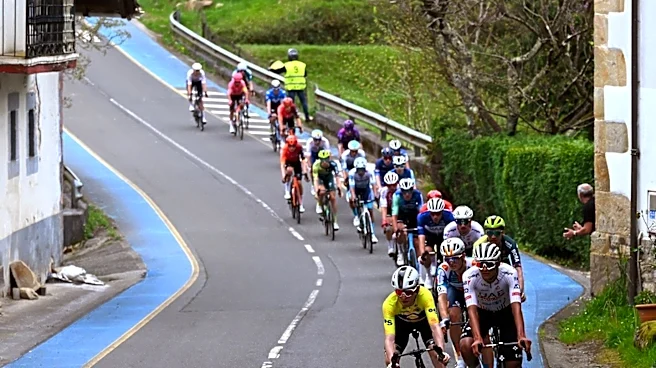
The Tour de France has commenced in Barcelona for the first time, marking a significant start to the renowned cycling event. This year's race features a new team time trial model, which has added a fresh dynamic to the competition. The favorites, Tadej
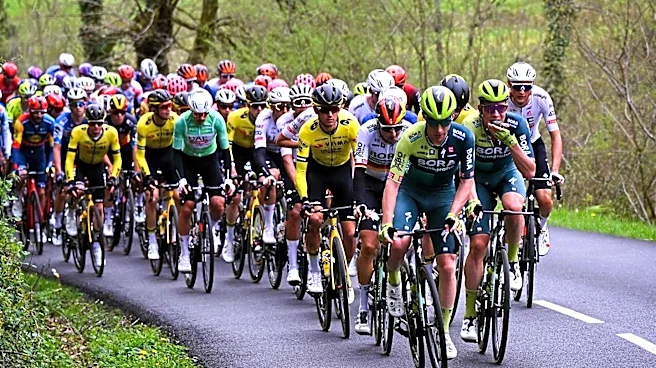
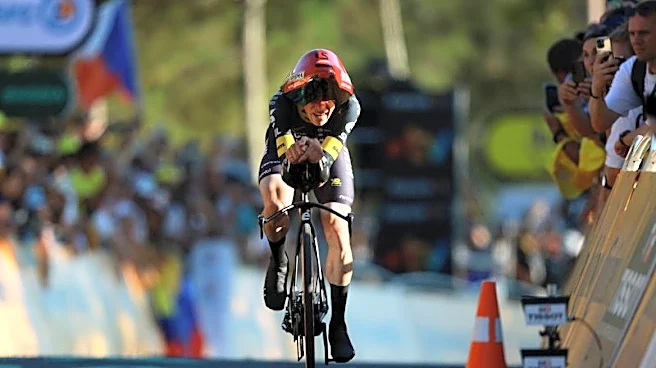
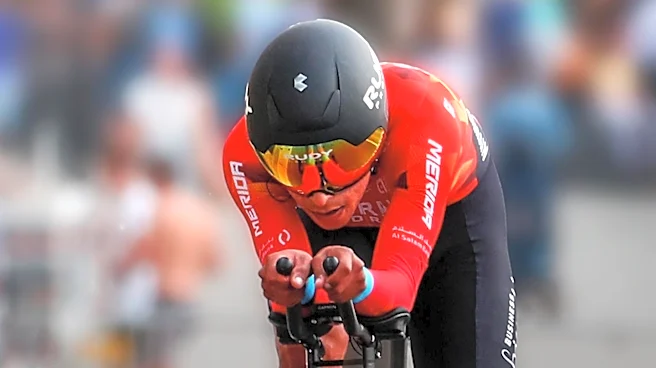
Pogacar and Jonas Vingegaard, who have dominated the event in recent years, are once again in the spotlight. The opening stage saw teams racing through the streets of Barcelona with aerodynamic helmets, creating a visually striking scene. Jonas Vingegaard and his team, Visma, emerged victorious in the first stage, with Vingegaard finishing 12 seconds ahead of Pogacar, securing the yellow jersey.
Why It's Important?
The Tour de France is one of the most prestigious events in the world of sports, drawing significant international attention. The introduction of a new team time trial model could influence future races, potentially altering strategies and outcomes. The performance of top contenders like Pogacar and Vingegaard is closely watched, as it sets the tone for the rest of the competition. The event also has economic implications, boosting tourism and local economies in host cities like Barcelona. The race's outcome can impact sponsorships and the careers of participating cyclists.
What's Next?
As the Tour de France progresses, the competition is expected to intensify. Cyclists will face various terrains and challenges over the next three weeks. The performance of Pogacar and Vingegaard will be crucial as they aim to maintain their lead. Fans and analysts will be watching closely to see if the new time trial model continues to influence the race dynamics. The event will also continue to draw global attention, with potential implications for future cycling events and the sport's popularity.