



What's Happening?
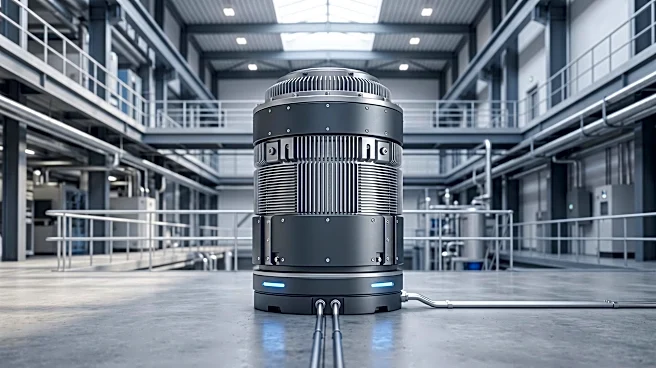
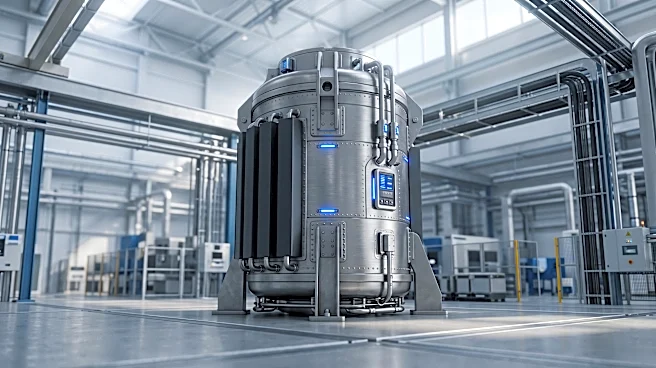
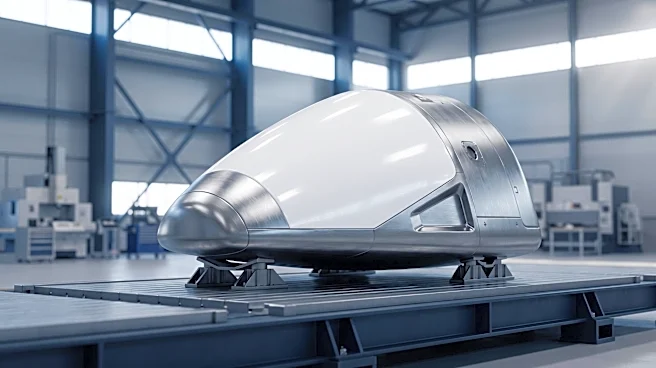
Radiant, an El Segundo, CA-based company, is developing mass-produced, transportable nuclear microreactors. Their first product, Kaleidos, is a 1-megawatt reactor designed to power 1,000 homes for five years. These microreactors are factory-built and
can be transported by land, sea, or air, allowing for deployment wherever power is needed. The company aims to provide a low-cost, portable, and zero-emissions power source as an alternative to fossil fuels. Radiant was founded in 2020 by former SpaceX engineers and is already under contract to deliver power to the U.S. Army, Navy, and Air Force, with pre-order agreements signed with Equinix for deployments starting in 2028. The U.S. grid is currently experiencing significant strain due to accelerating power demand, leading to higher utility costs, increased carbon emissions, and backlogs in interconnection.
Why It's Important?
The development of transportable nuclear microreactors by Radiant holds significant importance for the U.S. energy landscape. These microreactors offer a solution to the growing strain on the U.S. power grid by providing on-site, reliable, and clean energy. For critical infrastructure such as military bases, data centers, and hospitals, the ability to deploy a self-contained power source can enhance energy security and resilience, reducing dependence on a vulnerable centralized grid. Commercial businesses also stand to benefit from a stable and potentially lower-cost energy supply. The zero-emissions nature of these reactors contributes to environmental goals by offering an alternative to carbon-emitting fossil fuels. This innovation could also stimulate economic growth through manufacturing and deployment, creating jobs and fostering technological advancement in the nuclear sector.
What's Next?
Radiant is actively expanding its manufacturing capabilities to support the production of its Kaleidos microreactors. The company is investing over $100 million at its El Segundo facility and plans an additional $280 million investment at Oak Ridge for manufacturing and fueling operations. With contracts already in place with the U.S. military and pre-order agreements with commercial entities like Equinix, initial deployments are scheduled to begin in 2028. The company is also actively recruiting nuclear engineers to further develop and refine its technology, focusing on areas such as radiation shielding, criticality safety, and reactor physics modeling. Continued regulatory approvals and successful deployment will be crucial for the widespread adoption and impact of this technology.
Beyond the Headlines
The emergence of transportable nuclear microreactors like Kaleidos could represent a paradigm shift in energy distribution and access, particularly in remote or disaster-prone areas. Beyond their immediate utility for critical infrastructure, these units could decentralize power generation, making communities more resilient to large-scale grid failures. The ethical implications of deploying small-scale nuclear technology, including waste management and safety protocols, will require careful consideration and robust regulatory frameworks. Culturally, public perception of nuclear energy, often associated with large-scale power plants, may need to evolve to accept smaller, more localized units. This development could also trigger long-term shifts in energy policy, potentially accelerating the transition away from fossil fuels and fostering a new era of distributed, clean energy solutions.