


What's Happening?
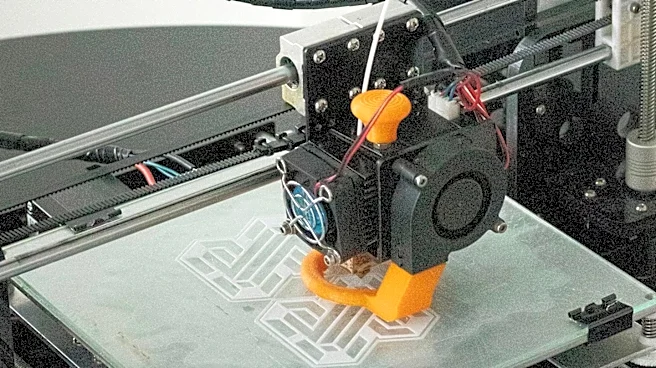
TNB Remaco is employing metal 3D printing technology to produce critical industrial spare parts, aiming to reduce lead times and dependence on conventional manufacturing methods. For a specific impeller project, the traditional manufacturing process required
approximately two months, split between material sourcing and machining. By contrast, TNB Remaco reverse-engineered the impeller and used Meltio’s wire-laser metal deposition technology to create a near-net-shape component. This component was then finish-machined using CNC equipment to meet precise dimensional and surface quality requirements. The finished impeller weighs around 11 kg. This initiative is part of TNB Remaco's broader strategy to develop manufacturing solutions for low-volume, high-value, and time-critical industrial components, especially when sourcing replacement parts is difficult or involves long production lead times.
Why It's Important?
This adoption of metal 3D printing by TNB Remaco signifies a crucial shift in industrial manufacturing, particularly for sectors like power generation and Oil & Gas. The ability to rapidly produce critical spare parts in-house can significantly mitigate equipment downtime and production losses caused by component failures. Traditional methods often involve lengthy procurement from original equipment manufacturers or time-consuming casting and CNC machining processes. By reducing lead times from months to potentially weeks or days, TNB Remaco can enhance operational efficiency, reduce maintenance costs, and improve the resilience of industrial operations. This approach also lessens reliance on external suppliers, offering greater control over the supply chain and part availability.
What's Next?
TNB Remaco plans to expand this metal 3D printing capability across various heavy industries, including power generation, Oil & Gas, petrochemical, marine, and heavy engineering sectors. Their comprehensive approach integrates reverse engineering, 3D scanning, additive manufacturing, CNC machining, metallurgy, and inspection to determine the most suitable production or repair method for each component. The company aims to establish robust in-house manufacturing capabilities to help industrial operators overcome challenges related to spare-part availability and respond more swiftly to equipment maintenance demands. This expansion suggests a future where on-demand manufacturing of complex industrial parts becomes more commonplace, driven by advanced additive manufacturing technologies.
Beyond the Headlines
The strategic move by TNB Remaco into metal 3D printing highlights a broader industrial trend towards digital manufacturing and localized production. This technology not only addresses immediate supply chain issues but also fosters innovation in material science and design for manufacturing. The ability to produce complex geometries that are difficult or impossible with traditional methods can lead to improved component performance and efficiency. Furthermore, this approach supports sustainability by potentially reducing waste through optimized material usage and extending the lifespan of existing equipment. It also signals a growing demand for skilled labor in additive manufacturing and related fields, driving new educational and training opportunities within the industrial sector.