



What's Happening?
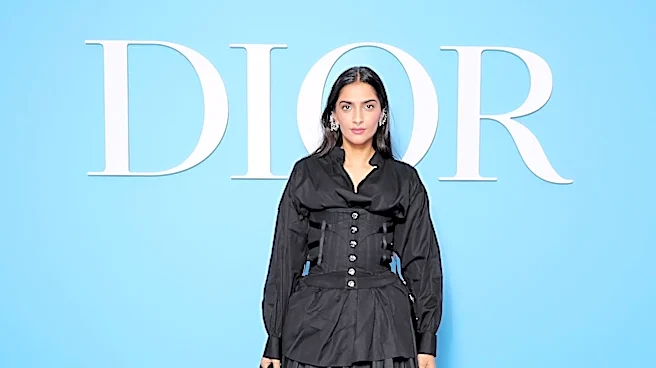
Dior's recent animated holiday campaign, created in collaboration with French animator Sylvain Chomet, has come under scrutiny for allegedly using generative AI, despite being promoted as hand-drawn. Other fashion brands like Levi's and Prada also launched
animated campaigns emphasizing traditional art forms to contrast with the rise of generative AI. However, social media users began analyzing the Dior ad frame-by-frame, leading to accusations that the brand was misleading the public. While Chomet and the campaign's producer denied using AI to generate the ad, they admitted to employing 'automated interpolation to generate some of the intermediate frames.' The ambiguity surrounding the type of interpolation used—whether it was simple algorithmic blending or more advanced generative AI—has fueled the 'craftwashing' debate, where brands are perceived to be falsely promoting traditional craftsmanship.
Why It's Important?
This controversy highlights a growing tension between traditional artistry and emerging artificial intelligence technologies within the creative industries, particularly in marketing and advertising. For brands, the perceived authenticity of their campaigns can significantly impact consumer trust and brand image. Accusations of 'craftwashing' can damage a brand's reputation, especially when it has explicitly positioned itself as championing traditional methods. This incident also underscores the increasing difficulty for consumers and experts to discern between human-made and AI-assisted content, raising questions about transparency and ethical practices in advertising. The debate could influence how brands approach future campaigns, potentially leading to clearer disclosures about AI involvement or a stronger commitment to purely traditional techniques to avoid similar backlash.
What's Next?
The ongoing debate around AI's role in creative processes is likely to intensify, prompting brands to re-evaluate their marketing strategies and communication around content creation. This incident may lead to increased demand for clear guidelines or industry standards regarding the disclosure of AI usage in advertising. Consumers and artists may push for greater transparency, potentially influencing regulatory bodies to consider rules for labeling AI-generated or AI-assisted content. Brands might also invest more in educating the public about the nuances of AI tools, distinguishing between different levels of AI involvement to manage perceptions. Ultimately, this could shape future creative collaborations and the public's understanding of artistry in the digital age.
Beyond the Headlines
Beyond the immediate controversy, this situation reflects a broader societal discussion about the value of human creativity versus technological efficiency. The term 'craftwashing' itself points to a cultural anxiety about the erosion of traditional skills and the potential for AI to devalue artistic labor. This incident could spark deeper conversations about intellectual property, the definition of 'art,' and the ethical responsibilities of companies utilizing advanced technologies. It also raises questions about the future of creative professions, as AI tools become more sophisticated. The public's reaction to Dior's campaign suggests a strong preference for genuine human artistry, indicating that authenticity remains a powerful currency in an increasingly digital and automated world.