
What's Happening?
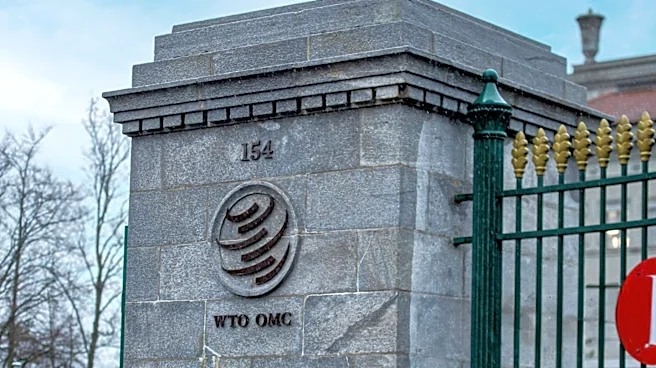
World Trade Organization (WTO) members have adopted a declaration aimed at repositioning the Aid for Trade initiative. This declaration, adopted on October 30 at the conclusion of the WTO’s tenth Global
Review of Aid for Trade in Geneva, seeks to strengthen support for countries looking to participate more effectively in global commerce. The initiative, now marking its twentieth anniversary, will place renewed emphasis on technical assistance, capacity-building, and addressing practical obstacles that make trading expensive or difficult for developing economies. The declaration acknowledges the need for traditional development cooperation to adapt to changing financing and commercial requirements. It also highlights the potential to mobilize various forms of finance, including grants, concessional funding, and blended-finance structures, to support trade-related projects and attract private-sector participation.
Why It's Important?
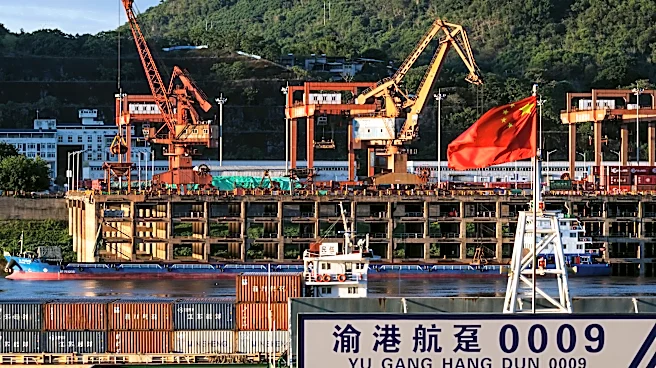
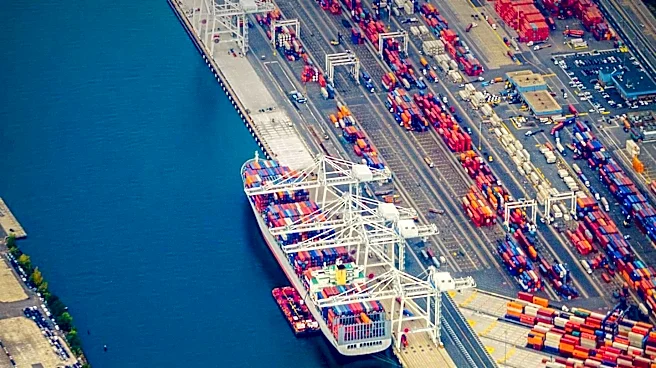
This repositioning of the Aid for Trade initiative is significant for global economic development and indirectly impacts U.S. trade interests. By focusing on technical assistance and capacity-building in developing economies, the initiative aims to integrate these countries more fully into the global trading system. This can lead to increased trade opportunities for U.S. businesses as new markets open up and supply chains become more efficient. For African economies, specific implementation questions include financing border systems, transport and logistics, quality infrastructure, and supporting small exporters. Improved physical and digital links in these regions can facilitate greater trade flows, benefiting U.S. companies seeking to expand their reach. The declaration's emphasis on mobilizing diverse financing mechanisms, including private-sector participation, could also create new investment opportunities for U.S. firms in developing markets, fostering economic growth and stability that aligns with U.S. foreign policy objectives.
What's Next?
The value of this declaration will be tested by the projects and cooperation arrangements that emerge from the revised agenda. The focus will be on achieving measurable improvements in trade costs, market access, and business competitiveness in developing countries. While the declaration outlines policy directions, it does not confirm new capital commitments for specific projects. Therefore, the next steps involve translating these policy goals into concrete actions and securing the necessary funding. The success of the initiative will depend on effective implementation, including addressing challenges such as regulatory frameworks and coordinated public agencies in developing nations. The WTO and its members will need to monitor progress closely to ensure that the repositioned Aid for Trade initiative delivers tangible benefits and helps integrate more countries into the global trading system.
Beyond the Headlines
Beyond the immediate economic implications, the repositioned Aid for Trade initiative touches upon broader themes of global equity and sustainable development. By addressing the practical obstacles faced by developing economies, the WTO is attempting to foster a more inclusive global trading system. This can help reduce economic disparities between nations and contribute to greater political stability worldwide. The emphasis on private-sector participation also signals a shift towards more innovative financing models for development, potentially leveraging market forces to achieve development goals. However, the success of such initiatives also depends on robust governance, transparency, and accountability to ensure that aid is effectively utilized and does not lead to unintended consequences. The long-term impact could be a more resilient and interconnected global economy, but only if the stated objectives are met with sustained commitment and effective execution.