






What's Happening?
Oracle has reportedly withdrawn from a $7 billion chip leasing deal with Tencent, a Chinese technology conglomerate. The agreement, initially signed earlier this year, involved Oracle deploying approximately 100,000 state-of-the-art AI chips at data centers
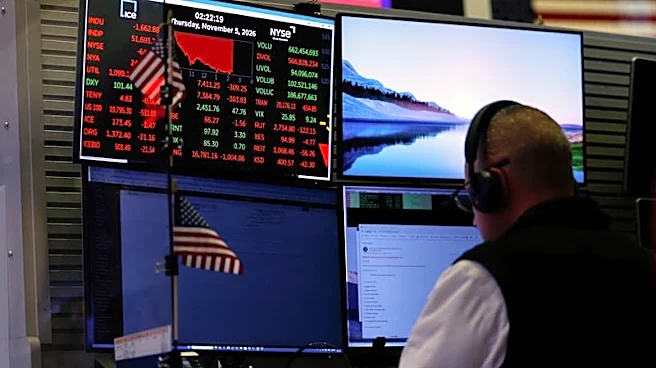
in Southeast Asia over five years, with Tencent having paid about 30% in advance. The decision to walk away from the deal came after U.S. authorities expressed concerns. This development occurs as Oracle's shares have experienced a significant downturn, falling 40% year-to-date, despite the company being considered a potential beneficiary of the AI boom. The broader market has also seen a tech sell-off, with the Nasdaq index dropping significantly due to worries over U.S. midterm election outcomes, erasing a record $2.5 trillion in market value.
Why It's Important?
Oracle's decision to abandon the $7 billion deal with Tencent highlights the increasing geopolitical tensions and regulatory scrutiny impacting technology collaborations between U.S. and Chinese companies. This move underscores the U.S. government's growing concern over the transfer of advanced technology, particularly AI-related hardware, to Chinese entities. For Oracle, while the $7 billion deal is a substantial sum, the source indicates it represents a minor fraction of the company's total engagements, which are reported to be around $664 billion. However, the cancellation introduces additional uncertainty into an already nervous market, potentially affecting investor confidence in Oracle's stock, which has already been 'hammered' this year. The incident also signals a challenging environment for U.S. tech companies seeking to expand in certain international markets, particularly those involving sensitive technologies.
What's Next?
The withdrawal from the Tencent deal could lead to increased scrutiny of other technology partnerships between U.S. and Chinese firms, potentially setting a precedent for future collaborations involving advanced AI infrastructure. Oracle may face questions from investors regarding the long-term implications of such geopolitical pressures on its international growth strategies, particularly in the rapidly expanding AI sector. The company will likely continue to navigate a complex regulatory landscape as it pursues its AI initiatives. For Tencent, the cancellation means a loss of access to a significant number of advanced AI chips, which could impact its AI development and data center expansion plans in Southeast Asia. The broader market will be watching for further indications of how U.S. regulatory bodies will influence technology deals with Chinese companies.
Beyond the Headlines
This event reflects a deeper trend of technological decoupling between the U.S. and China, driven by national security concerns and competition for technological supremacy. The U.S. government's intervention in a commercial deal between two private companies, even if one is foreign, illustrates the expanding scope of national security considerations in economic policy. This could lead to a more fragmented global technology ecosystem, where companies are forced to choose sides or develop separate supply chains and partnerships based on geopolitical alignments. The ethical implications of restricting access to advanced AI technology also come into play, as it could hinder global scientific progress and the equitable distribution of technological benefits. Ultimately, this move by Oracle, influenced by Washington, signifies a significant shift in the global technology landscape, prioritizing national interests over purely commercial considerations.