






What's Happening?
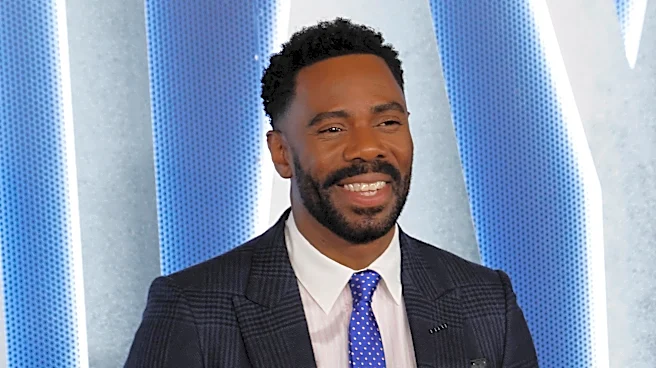
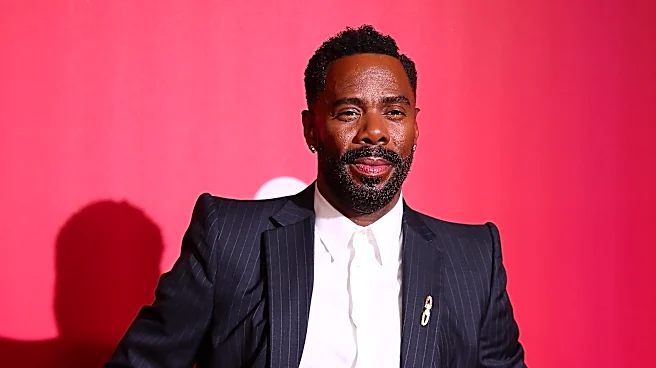
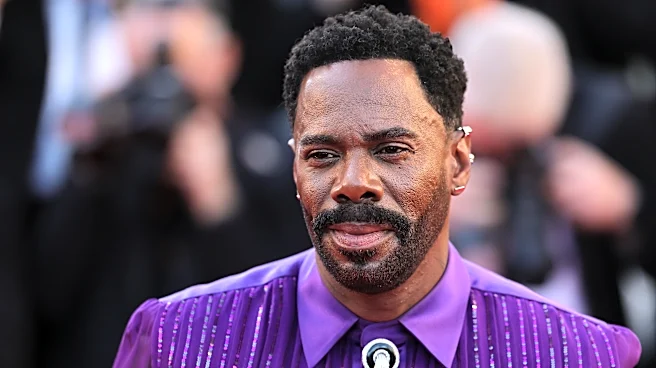
Actor Colman Domingo publicly responded to a film critic who dismissed his performance as Joe Jackson in the biopic 'Michael.' The critic posted on X, stating that awards prognosticators should not consider Domingo's 'mid performance/bad movie' for nominations.
Domingo retorted with a simple question: 'Who hurt you?' This exchange occurred as the film 'Michael,' released in April 2026, has achieved significant commercial success, grossing over $1.029 billion worldwide. This makes it the highest-grossing biopic of all time and Lionsgate's highest-grossing movie to date. Despite its box office triumph, the film has received mixed critical reviews, with some critics finding the portrayal of Michael Jackson and the narrative to be flat or evasive. Domingo, a two-time Oscar nominee for his roles in 'Rustin' (2023) and 'Sing Sing' (2024), played the role of Michael Jackson's father in the film.
Why It's Important?
This interaction highlights the ongoing tension between critical reception and commercial success in the film industry. While 'Michael' has proven to be a massive box office hit, indicating strong audience engagement and financial viability, its critical reception has been less enthusiastic. Domingo's direct response to a critic underscores the personal impact of film reviews on actors, especially those with a strong professional track record. For Lionsgate, the film's financial performance is a significant win, potentially influencing future investment in biographical films. The debate also touches upon the subjective nature of film criticism versus objective box office numbers, raising questions about what truly defines a film's success. For Domingo, maintaining his artistic integrity and defending his work, even in the face of criticism, is crucial for his public image and career trajectory, especially as awards season approaches.
What's Next?
Nominations for the 2027 Academy Awards are scheduled to be announced in January, which will reveal whether Colman Domingo's performance in 'Michael' garners any recognition despite the critic's dismissal. The film's continued box office performance may influence how it is perceived in the long run, potentially leading to further discussions about the disconnect between critical and popular opinion. Lionsgate may leverage the film's financial success in future marketing campaigns or in greenlighting similar projects. Domingo's public stance could also set a precedent for how actors engage with online criticism, potentially encouraging more direct responses from public figures. The ongoing discourse around the film's quality versus its commercial appeal is likely to continue as awards season progresses and industry professionals reflect on its impact.
Beyond the Headlines
The exchange between Colman Domingo and the critic delves into broader themes of artistic validation and the evolving landscape of film criticism in the digital age. Social media platforms like X provide direct avenues for critics to voice opinions and for artists to respond, blurring the lines between traditional reviews and public discourse. This direct engagement can humanize the critical process but also expose artists to more immediate and sometimes harsh feedback. The film's immense financial success, despite mixed reviews, also prompts a re-evaluation of what constitutes 'quality' in cinema—is it critical acclaim, audience engagement, or box office revenue? This situation could contribute to a larger conversation within the entertainment industry about the influence of critics versus the power of the audience, and how these dynamics shape the production and reception of major studio releases.